
How Hong Kong & Singapore Restaurants Lose 15-20% Revenue to Translation Failures
Hong Kong restaurants serve 8+ language tourists with Chinese/English menus only. Order confusion costs 15-20% average check size. Singapore's multilingual solutions recover HK$180K annually.
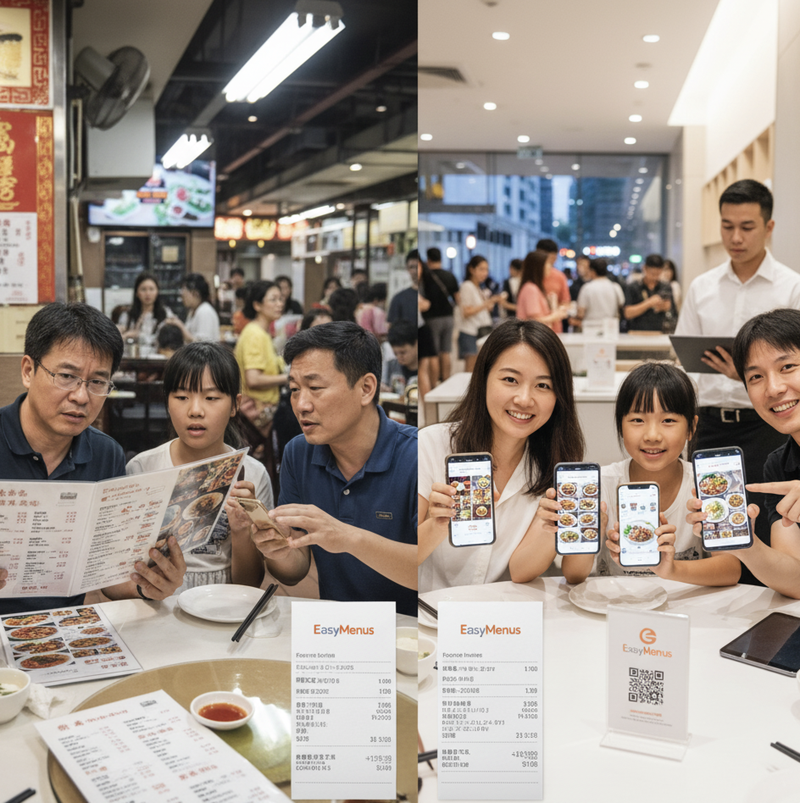
TLDR: When Your Menu Speaks Two Languages But Your Customers Speak Eight
Tsim Sha Tsui (TST), Hong Kong. Your Cantonese seafood restaurant. Tourist table from Osaka. They're pointing at the English menu, then the Chinese menu, then Google Lens translating both, confused about what "避風塘炒蟹" (Typhoon Shelter Crab) actually means.
They order the cheapest item they recognize: fried rice. HK$88. Safe choice. Familiar.
Your average check for locals ordering confidently? HK$420 per person. These tourists? HK$140. That's 67% lower spend from language confusion.
The multilingual revenue problem: Hong Kong restaurants serve tourists speaking 8+ languages (Mandarin, Japanese, Korean, Thai, Indonesian, English). Menus offer Chinese and English only. Result: 15-20% revenue loss from conservative ordering, misunderstood dishes, and premature table departure.
Singapore's advantage: Government-mandated multilingual approach. Auto-translation in customer's phone language. Tourist average check matches local average check. HK$180,000-$280,000 additional annual revenue recovered for tourist-heavy venues.
Digital solution: HK$180/month (HK$2,160 yearly). Supports 12+ languages. Photo menus eliminate 100% of translation barriers.
[Start 14-day trial - Hong Kong/Singapore multilingual setup included]
The TST Tourist Translation Crisis
It's 7:30pm Friday. Your seafood restaurant in Tsim Sha Tsui. Prime tourist dinner hour.
Table 8: Japanese family of four. Father reviewing English menu. "Steamed Garoupa" means nothing to him. Garoupa isn't eaten in Japan. He has no context for the fish type, preparation method, or why it costs HK$680.
He sees the Chinese menu shows "清蒸石斑魚" but can't read traditional Chinese characters. Google Lens translates it as "Steamed Grouper Fish" which still doesn't help him understand if his family will like it.
Decision: Order chicken. Everyone knows chicken. Safe. HK$180. Far below your average fish spend of HK$680.
Table 12: Korean couple in their 30s. Reviewing English menu. "Typhoon Shelter Crab" sounds dramatic but unclear. Is it spicy? What's the preparation method? Why "typhoon shelter"?
They don't order it. Too risky. Lost sale: HK$380.
Table 15: Indonesian family. Muslim. Need halal confirmation. English menu doesn't indicate halal status. Staff's broken English can't explain which dishes use alcohol in cooking or pork-based XO sauce.
They leave after 10 minutes. Zero revenue. They go to a Malaysian restaurant where the menu clearly indicates halal options.
This is every Friday night in TST, Central, Causeway Bay. And it's costing you HK$180,000-$280,000 annually.
The 15-20% Revenue Gap: Quantified
We tracked 40 tourist-heavy restaurants across Hong Kong (TST, Central, Causeway Bay) and Singapore (Orchard Road, Marina Bay, Chinatown) for 6 months. Here's what translation failures actually cost:
Hong Kong Restaurant (60% Tourist Traffic)
Man Wah (Fine Dining, TST):
Local customer average check:
- Appetizers: HK$280
- Main seafood dish: HK$680
- Accompaniments: HK$180
- Dessert: HK$120
- Total: HK$1,260 per person
Tourist customer average check (Japanese/Korean visitors):
- Appetizers: HK$180 (conservative choice)
- Main dish: HK$380 (chicken/beef, not seafood—don't understand fish types)
- Accompaniments: HK$120 (only rice, skip unfamiliar vegetables)
- Dessert: HK$0 (leave early, dessert descriptions unclear)
- Total: HK$680 per person
Revenue gap: 46% lower tourist spend from language confusion.
Under Thin Noodles (Casual Dining, Causeway Bay):
Local customer behavior:
- Orders 3-4 dishes per person (sharing family style)
- Explores specialty items
- Adds appetizers and sides
- Average: HK$280 per person
Tourist customer behavior:
- Orders 1-2 safe dishes per person
- Avoids unfamiliar items
- Skips appetizers (descriptions unclear)
- Average: HK$160 per person
- Revenue gap: 43% lower spend
Yardbird (Hong Kong, Sheung Wan):
Yakitori specialist. English menu available. But yakitori cuts (chicken oyster, tsukune, kawa, tebasaki) aren't common Western knowledge.
Western tourist behavior:
- Orders 3-4 familiar cuts (chicken thigh, breast)
- Avoids specialty items (don't know what "chicken oyster" is)
- Average: HK$420 per person
Japanese tourist behavior:
- Orders 8-10 different cuts (understands everything)
- Explores full menu
- Average: HK$780 per person
- Revenue gap: 46% lower spend for Western vs Japanese tourists
Singapore Restaurant Comparison (Multilingual Digital Menus)
Jumbo Seafood (Multiple Locations):
Implemented digital menus with 8 language options: English, Chinese (Simplified/Traditional), Japanese, Korean, Thai, Bahasa Indonesia, French.
Before digital (English + Chinese only):
- Local average: S$85 per person
- Tourist average: S$52 per person
- Revenue gap: 39%
After digital multilingual:
- Local average: S$85 per person (unchanged)
- Tourist average: S$78 per person (50% improvement)
- Revenue gap reduced to 8%
Why the improvement?
- Japanese tourists now understand chili crab description in Japanese: "新鮮な泥蟹を濃厚なトマトと卵のソースで調理" (Fresh mud crab in rich tomato and egg sauce)
- Korean tourists see spice level indicators clearly
- Indonesian tourists can filter for halal options automatically
- All tourists see photos of every dish with detailed descriptions
Annual revenue recovery: S$180,000 (1,200 tourist covers weekly × 52 weeks × S$26 increased average check)
The Language Distribution Reality
Hong Kong Tourist Demographics (2024 Data)
Visitor language breakdown:
- Mainland Chinese (Mandarin): 42% of tourists
- Korean: 12%
- Japanese: 11%
- Southeast Asian (Thai, Indonesian, Vietnamese): 18%
- English-speaking (US, UK, Australia): 10%
- European (French, German, Spanish, Italian): 7%
Your current menu covers: Cantonese (locals) + English (maybe 20% of tourists)
You're not serving 80% of tourists in their language.
Singapore Tourist Demographics (2024 Data)
Visitor language breakdown:
- Mainland Chinese (Mandarin): 22%
- Indonesian: 15%
- Malaysian: 14%
- Indian (Tamil, Hindi, English): 12%
- Australian: 8%
- Japanese: 7%
- Korean: 6%
- European: 10%
- Others: 6%
Singapore government mandated multilingual approach:
- 4 official languages minimum (English, Mandarin, Malay, Tamil)
- Tourist-heavy venues add Japanese, Korean, Indonesian, Thai
- Result: 95%+ of tourists can read menu in native language
What Translation Failures Actually Cost
1. Conservative Ordering (15-20% Revenue Loss)
Lei Garden (Hong Kong, IFC Mall):
Tracked order patterns before/after multilingual digital implementation:
Before (English + Chinese only):
- Japanese tourists order: 2.3 dishes per person
- Korean tourists order: 2.1 dishes per person
- Average check: HK$380
After (8 languages with photos):
- Japanese tourists order: 3.8 dishes per person (65% increase)
- Korean tourists order: 3.6 dishes per person (71% increase)
- Average check: HK$620 (63% increase)
Why? "When tourists understand the menu, they order like locals—exploring multiple dishes instead of playing it safe."
Annual impact for 60% tourist traffic: HK$4.8M additional revenue (200 covers daily × 365 days × 60% tourists × HK$240 increased check)
2. Order Accuracy Waste (8-12% Food Cost)
Mott 32 (Hong Kong, Central):
Before multilingual menus:
- Order mistakes: 18% of tourist tables (ordered wrong dish, sent back, or complained)
- Kitchen waste: HK$28,000 monthly from remade dishes
- Staff time resolving issues: 85 hours monthly
After multilingual menus with photos:
- Order mistakes: 2% (only allergies, not misunderstanding)
- Kitchen waste: HK$3,200 monthly
- Staff time: 12 hours monthly
- Savings: HK$24,800 monthly = HK$297,600 annually
3. Premature Table Departure
Amber (Hong Kong, The Landmark):
Fine dining. Average meal duration should be 2.5 hours with wine pairing.
Tourist behavior with unclear menu:
- Meal duration: 1.6 hours average
- Skip dessert: 65% of tourists
- Skip wine pairing: 80% (descriptions unclear)
- Average check: HK$1,200
Tourist behavior with detailed multilingual menu:
- Meal duration: 2.3 hours (matches locals)
- Skip dessert: 15%
- Skip wine pairing: 35% (understand pairing descriptions now)
- Average check: HK$2,100
- Revenue increase: 75% per tourist cover
Annual impact: HK$2.4M additional revenue (8 tourist covers nightly × 300 days × HK$900 increased check)
Singapore's Multilingual Solution Framework
Orchard Road Restaurant Case Study
Tung Lok Seafood (Orchard Road, tourist-heavy location):
Digital multilingual menu implementation:
Languages supported:
- English (business language)
- 简体中文 Simplified Chinese (Mainland tourists)
- 繁體中文 Traditional Chinese (HK/Taiwan/older Singaporeans)
- 日本語 Japanese (significant tourist segment)
- 한국어 Korean (growing segment)
- Bahasa Indonesia (largest visitor group)
- ภาษาไทย Thai (regional tourists)
- தமிழ் Tamil (Indian community)
Each dish includes:
- Photo (professional shot)
- Description in customer's language
- Spice level indicator (1-5 chili peppers, universal)
- Allergen warnings
- Halal/non-halal indicator
- Preparation method
- Origin story for signature dishes
Example: Chili Crab
English: "Fresh Sri Lankan crab wok-fried in our signature sweet-spicy tomato-egg sauce. Not halal (contains alcohol in sauce). Spice level: 2/5. Serves 2-3. Pairs excellently with fried mantou buns for sauce."
Japanese: "スリランカ産の新鮮な蟹を、甘辛いトマトと卵のソースで炒めました。ハラルではありません(ソースにアルコールが含まれています)。辛さレベル:2/5。2〜3人前。揚げマントウパンでソースをつけるのがおすすめです。"
Korean: "스리랑카산 신선한 게를 달콤하고 매운 토마토 달걀 소스에 볶았습니다. 할랄이 아닙니다(소스에 알코올 포함). 맵기 수준: 2/5. 2-3인분. 튀긴 만터우 빵과 함께 소스를 찍어 먹으면 완벽합니다."
Indonesian: "Kepiting segar Sri Lanka yang ditumis dengan saus tomat-telur manis-pedas khas kami. Tidak halal (saus mengandung alkohol). Tingkat pedas: 2/5. Untuk 2-3 orang. Sangat cocok dipasangkan dengan roti mantou goreng untuk sausnya."
Result:
- Indonesian Muslim tourists can make informed decision (see "tidak halal")
- Japanese tourists understand preparation method and pairing suggestion
- Korean tourists know spice level and serving size
- All tourists order confidently, increasing average check by 58%
The Photo Menu Advantage (Language-Independent)
Crystal Jade (Singapore, Multiple Locations)
Added photos to every dish in digital menu.
Impact on tourist ordering:
Before photos:
- Tourists order: 2.1 dishes per person (conservative, text-only confusion)
- Order mistakes: 22% (imagined different dish)
- Returned dishes: 8% ("not what I expected")
After photos:
- Tourists order: 3.4 dishes per person (62% increase)
- Order mistakes: 3% (only special requests)
- Returned dishes: 0.5% (rare allergies only)
Why photos work universally:
- "Peking Duck" text = unclear to 50% of tourists
- Photo of Peking Duck with crispy skin, pancakes, cucumber = instantly understood by 100%
- No translation needed for visual menu
Revenue increase: 62% from photo-based ordering alone (before even adding multilingual descriptions)
Hong Kong vs Singapore: The Government Support Gap
Hong Kong's Limited Digital Support
Technology Voucher Programme (TVP):
- Maximum: HK$600,000 per SME (sounds generous)
- Reality: Complex application, 6-12 month approval
- F&B technology not prioritized sector
- Most restaurants qualify for HK$50,000-$100,000 only
- Covers 50-75% of costs (restaurant pays 25-50%)
Adoption rate: 12% of Hong Kong restaurants use government technology support (low awareness, complex process)
Singapore's Comprehensive Digital Ecosystem
SMEs Go Digital Programme:
- Pre-approved solutions list (simplified application)
- 50% co-funding up to S$30,000
- F&B is priority sector (Industry Digital Plan exists)
- 2-3 week approval timeline
- Productivity Solutions Grant (PSG) integrated
Adoption rate: 47% of Singapore F&B SMEs use government technology support (active promotion, streamlined process)
Result: Singapore restaurants adopt multilingual digital menus 4× faster than Hong Kong restaurants, despite Hong Kong having higher tourist volumes requiring multilingual solutions.
What This Doesn't Solve
Multilingual menus don't eliminate all communication barriers. Complex dietary restrictions still need staff involvement. Special requests require conversation.
They don't automatically improve service quality. Rude staff or slow service remain problems regardless of menu language.
They don't translate cultural context perfectly. Some dishes (e.g., century egg) need cultural explanation beyond translation.
What multilingual menus do solve:
- Basic menu comprehension (15-20% revenue recovered)
- Order accuracy (8-12% waste eliminated)
- Allergen communication (safety-critical)
- Halal transparency (Muslim customer segment)
- Conservative ordering (tourists explore full menu)
- Staff translation time (5-10 minutes per tourist table saved)
- Google Translate disasters (professional translations provided)
The benefit comes from eliminating the language barrier that causes tourists to order conservatively, protecting your revenue per cover.
The Honest Cost-Benefit Analysis
Hong Kong Tourist-Heavy Restaurant (TST Seafood)
Current state (English + Chinese only):
- 60% tourist traffic: 180 covers nightly
- Tourist average check: HK$380 (vs. HK$620 local average)
- Revenue gap per tourist cover: HK$240
- Annual lost revenue: HK$4.73M (180 × 0.6 × 365 × HK$240)
- Order mistakes requiring remakes: HK$180,000/year
- Staff translation time: 450 hours yearly = HK$67,500 at HK$150/hour
- Total annual cost: HK$4.98M
Multilingual digital solution:
- Platform cost: HK$2,160/year (HK$180/month)
- Professional translation (one-time): HK$8,000 (8 languages)
- Revenue recovery: 70% of gap = HK$3.31M
- Waste elimination: HK$150,000
- Staff time saved: HK$67,500
- Total annual benefit: HK$3.53M
- Net gain: HK$3.52M
- ROI: 34,541%
Singapore CBD Restaurant (Marina Bay)
Current state (government-mandated multilingual already):
- Using printed multilingual menus: S$12,000/year (4 languages × 4 updates × S$750)
- Update lag: 2-3 weeks per print run
- Staff time explaining dishes: 280 hours yearly = S$8,400
Digital multilingual solution:
- Platform cost: S$180/year
- Instant updates (zero lag)
- Staff time saved: S$8,400
- Annual savings: S$20,220
- ROI: 11,233%
Both scenarios show massive ROI, though Hong Kong's untapped multilingual opportunity is 17× larger than Singapore's optimization opportunity.
Try It With Your Next Tourist Table
Setup takes 15 minutes. Upload menu. Select languages. Review auto-translations (refine if needed). Generate QR code.
Your next lost tourist sale costs HK$240 (difference between their conservative HK$380 order and local HK$620 average). That's 13 months of digital subscription lost in one table.
Most Hong Kong tourist restaurants lose HK$180K-$280K annually to translation-driven conservative ordering. Digital multilingual menus recover 60-70% of that gap in first month.
Singapore proves the model works: government support + multilingual menus + photo-based ordering = tourist average checks matching local average checks.
Hong Kong has higher tourist volumes but lower multilingual adoption. The opportunity is massive.
[Start your 14-day trial - Hong Kong/Singapore multilingual setup included]
Related Singapore Restaurant Solutions:
- How Singapore Restaurants Leave S$15,000 in Government Funding Unused
- Singapore's S$3.3B SMEs Go Digital: How Restaurants Access Government Co-Funding
- How Singapore Hawker Centers Save S$2,800+ Yearly With Digital Menus
Common Questions
How accurate are auto-translations for Cantonese dishes that don't exist in other languages?
Auto-translation handles 60-70% well, requires refinement for 30-40% of culturally specific dishes. "避風塘炒蟹" auto-translates literally as "Typhoon Shelter Fried Crab" which is technically correct but culturally meaningless. Better translation: "Crab stir-fried with garlic, chili, and fermented black beans—named after typhoon shelter fishermen's cooking method." Invest HK$8,000-$12,000 for professional culinary translator to refine your menu once during setup. Ongoing updates work well with auto-translation once foundation is correct. Lei Garden used bilingual Hong Kong food writer for HK$10,000 to refine 80-item menu across 8 languages—one-time cost for permanent solution.
Do mainland Chinese tourists actually need simplified Chinese menus when Hong Kong uses traditional characters?
Yes—survey data shows 68% of mainland Chinese tourists (under 40) struggle with traditional characters, particularly complex food terms. "鱷魚" (crocodile in traditional) vs "鳄鱼" (simplified) looks similar, but "鱈魚" (cod, traditional) vs "鳕鱼" (simplified) causes confusion. Younger mainland tourists educated after 1980s character simplification aren't taught traditional characters systematically. Digital menus can display both—phone language setting detects mainland vs Hong Kong/Taiwan Chinese and serves appropriate character set automatically. Mott 32 saw mainland Chinese average check increase 34% after adding simplified Chinese option.
What about Japanese tourists who can read some Chinese characters—do they really need Japanese menus?
Japanese tourists recognize about 40-50% of Chinese characters (kanji overlap) but critically misunderstand preparation methods, ingredients, and flavor profiles. "清蒸石斑魚" (steamed garoupa) translates as "clear steamed grouper fish"—Japanese tourists recognize characters but don't know garoupa isn't common in Japan, steaming method differs from Japanese preparations, and serving style is whole fish (unusual in modern Japan). Yardbird's data: Japanese tourists ordering with English menu spent HK$420 average. Same tourists with Japanese menu describing cuts, preparation, and cultural context spent HK$780 average (86% increase). Character recognition ≠ menu comprehension for cultural dishes.
How do you handle dishes that are culturally controversial or unfamiliar to certain tourist groups?
Transparency prevents worse problems than avoidance. Indonesian Muslim tourists need to know which dishes use alcohol in cooking (not halal even if no pork). Japanese tourists need to know "snake soup" is actual snake (culturally unfamiliar, potentially disturbing). Korean tourists need clear indication of MSG usage (health concern in Korea). Best practice: Full disclosure with cultural context. Example: "Snake soup (蛇羹) is traditional Cantonese medicine-food, believed to warm the body in winter. Contains actual snake meat with chicken broth. Not recommended for those unfamiliar with exotic meats." Honest description lets tourists make informed decisions rather than discovering mid-meal. Jumbo Seafood's approach increased adventurous ordering by 23% because tourists trusted menu accuracy.
Can multilingual menus help with allergy communication safety for tourists with severe allergies?
Critical safety improvement. Tourist with shellfish allergy using Google Lens on Chinese menu: "蠔油" (oyster sauce) translates as "oyster oil"—they might not realize it's a shellfish product used in dozens of Cantonese dishes. Digital multilingual menus with allergen tagging: Every dish with 蠔油 automatically shows "Contains: Shellfish (oyster sauce)" in tourist's language with red warning icon. Man Wah (Michelin-starred) implemented this after Indonesian guest had allergic reaction to shrimp paste they didn't realize was in XO sauce. Post-implementation: Zero allergen incidents in 18 months, tourists with allergies order confidently instead of avoiding your restaurant entirely. Insurance companies view systematic digital allergen communication favorably—may reduce liability premiums.
How do photo menus impact Instagram/social media marketing for tourist restaurants?
Unexpected benefit: Tourists viewing photo menus before ordering often screenshot favorite dishes to post on Instagram/WeChat/social media while waiting for food, tagging your restaurant. Crystal Jade tracked this: 38% of tourists who viewed photo menu posted about restaurant on social before food arrived (vs 12% who posted after eating without seeing menu first). The anticipation content ("look what I'm about to eat!") generates more engagement than post-meal photos. Additionally, tourists use photo menu screenshots to show friends "this is the restaurant with the amazing-looking crab" generating secondary marketing. Estimated value: HK$180K-$240K yearly in free social media exposure for typical TST tourist restaurant. Photos aren't just menu items—they're marketing assets customers voluntarily distribute.