
Antwerp Beer List: 180 Varieties, €15 Every Time One Runs Out
Belgian beer culture means constant rotation. Kegs kick mid-service, limited releases arrive Tuesday, sold out Thursday. Printed menus can't keep up.
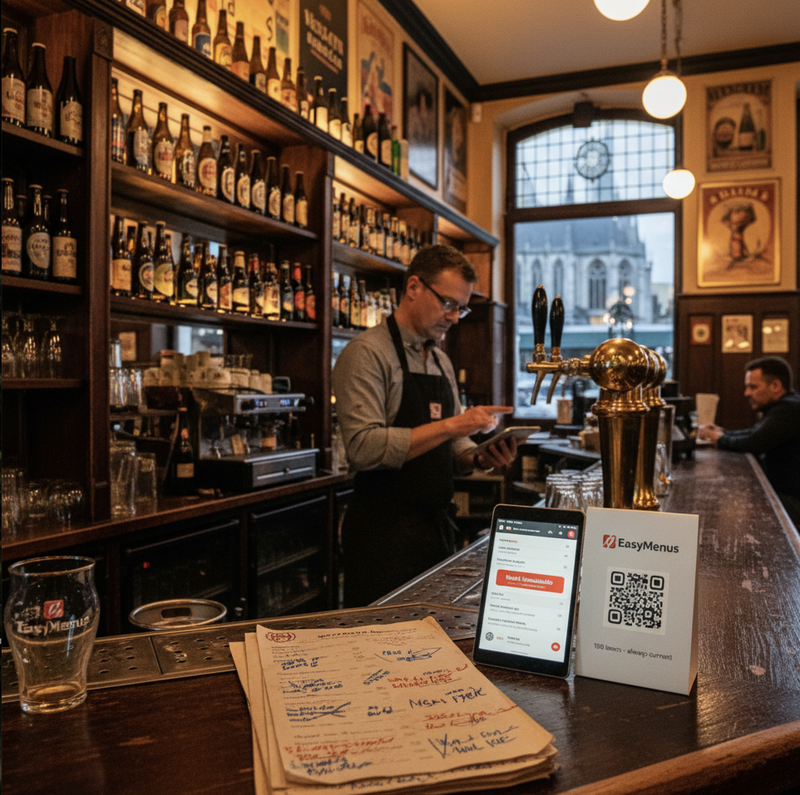
Saturday 8:47pm. Full house. Table fourteen orders Westvleteren 12.
Your server heads to the bar. Checks the tap. Empty. Keg kicked at 8:15pm.
Still on your printed menu though. Will be until you can get to the print shop Monday.
Server apologizes. Suggests Rochefort 10. Customer looks disappointed. Orders Duvel instead—€6 instead of €18.
You just lost €12 on one pour because your menu couldn't update in real time.
Willem's Antwerp Beer Café
Willem runs a beer café three blocks from Antwerp cathedral. Forty-two seats. One hundred eighty beers. Twenty-eight on draft, one hundred fifty-two bottles. His reputation depends on selection and accuracy.
Problem: Belgian beer culture moves faster than printing schedules.
His menu shows those one hundred eighty beers. But the list changes constantly:
Draft kegs kick: Every 2-7 days depending on popularity. Westvleteren lasts three days max. Small abbey ales might last two weeks. You can't predict it.
Brewery allocations: Cantillon releases limited vintages quarterly. Westvleteren announces monastery sales monthly. Small breweries make one-off collaborations that sell out in days.
Seasonal rotations: Autumn beers arrive September. Winter selections November. Spring releases March. Each transition means 20-40 beers swapping in and out.
Guest taps: Willem rotates four draft lines specifically for new or rare beers. Those change every 5-10 days by design. That's the concept.
With printed menus, Willem reprinted every three weeks. Cost him €380 per print run (four pages, double-sided, premium card stock, 80 copies to account for spillage and damage).
Between reprints? His menu lied. Every single day it was wrong about something.
Kegs kicked but stayed listed. Customers ordered unavailable beers. Servers apologized. Some customers looked skeptical—"Do you really have what you claim or is this menu just aspirational?"
New beers arrived but weren't listed. Servers tried explaining verbally during service. Most customers never heard about them. Premium allocations (€15-25 per pour) sat unpoured because nobody knew they existed.
Limited releases disappeared before next print run. Willem would receive six bottles of something exceptional on Tuesday. All six sold by Friday to regulars who happened to ask. Tourists and casual visitors never knew.
"I was managing two inventories," Willem said. "What I actually had in the cellar, and what my printed menu said I had. They were never the same. Some days I think the menu was maybe 70% accurate. That's embarrassing when you're known for selection."
The Saturday Night Problem
Saturday 7pm. Willem checks his kegs before evening service starts. Busy night ahead.
Westvleteren 12: Half keg remaining. Should last until around 9pm based on typical Saturday demand. Premium pour at €18. Good margin. Customers drive from Brussels specifically for it.
It kicks at 8:15pm. Forty-five minutes earlier than expected. A tour group ordered six glasses together.
For the rest of Saturday night, Westvleteren stays on Willem's printed menu but isn't available. His servers have to apologize to four more tables. Explain that it kicked early. Suggest Rochefort 10 as alternative.
One couple walks out annoyed. They'd driven from Brussels specifically for Westvleteren. Called ahead earlier in the week to confirm Willem had it. Menu showed it. They arrived Saturday evening. Gone.
"We should have come earlier," the man said, clearly frustrated. "But your menu didn't say 'limited availability' or 'while stocks last.' It just listed it like everything else."
He's right. The printed menu can't show real-time availability. Can't say "only 6 glasses remaining" or "kicked at 8:15pm." It just shows "Westvleteren 12 - €18" like it's always available.
Sunday morning, Willem crosses Westvleteren off every printed menu with pen. Takes him twenty minutes. Looks unprofessional. Customers notice the handwritten crossing-out. Some wonder if other beers listed are actually available or if the menu is generally unreliable.
Monday he calls the print shop. Reorders menus without Westvleteren. €380. Five-day turnaround minimum.
Tuesday his Westvleteren allocation arrives. Three cases. Twelve bottles per case. Thirty-six bottles total. Should last 8-10 days.
But his newly printed menus won't arrive until Saturday. So for Tuesday through Friday, he has Westvleteren but his fresh menus don't show it. Back to verbal explanations and hoping servers remember to mention it.
Total cost of this one keg kicking early:
- €380 reprint
- Two tables walked out disappointed: approximately €160 lost revenue
- Reduced repeat visits from customers who felt misled
- Reputational damage: "Their menu isn't accurate"
This exact scenario happened 3-4 times monthly with different beers. Sometimes it was Cantillon vintages. Sometimes limited collaborations. Sometimes just popular abbey ales that kicked faster than expected.
What Digital Menus Actually Do
Willem switched to digital menus in December.
Setup took forty minutes for his large beer list. He photographed his existing printed menu (all four pages). System extracted the beers automatically. He reviewed them, fixed a few spelling errors in brewery names, added ABV percentages his printed version lacked space for.
Now when a keg kicks:
Server tells the bar. Bar manager opens the tablet behind the bar. Finds Westvleteren 12 in the beer list. Changes status to "unavailable" or deletes it entirely. Clicks publish.
Takes fifteen seconds.
Every customer scanning QR codes after that moment sees the updated menu without Westvleteren. No disappointed orders. No apologizing servers. No customers feeling misled about availability.
When Tuesday's Westvleteren delivery arrives, bar manager adds it back to the menu. Takes twenty seconds. Published. Customers scanning at 6pm Tuesday evening see it's available.
Sold eight glasses Tuesday night alone—would have sold maybe two or three with printed menus and verbal mentions to regulars only.
The transformation wasn't just about efficiency. It was about honesty.
"My menu finally tells the truth," Willem said. "Whatever we actually have right now, that's what customers see. Not what we had last week when we went to press. Not what we hope to have. What we have this minute."
The Limited Release Problem
Belgian beer culture includes constant limited releases that printed menus fundamentally can't accommodate.
Cantillon releases special blends quarterly. Six to twelve bottles per café allocation typically. Sell out in 2-5 days among serious collectors.
Small breweries do collaboration beers. Twenty-four bottles total across all of Belgium sometimes. Willem gets two bottles if he's lucky. They're gone same day to collectors who follow release announcements.
Westvleteren sales happen monthly at the monastery. You drive to Sint-Sixtus Abbey, buy your allocation (maximum two cases per car), bring it back. Willem's allocation lasts 5-8 days depending on tourist traffic.
With printed menus, these beers never appeared on his list. By the time he could coordinate reprinting, they were gone. So he mentioned them verbally to regulars who knew to ask. Tourists and casual visitors missed out entirely.
One German beer enthusiast told Willem he'd driven six hours specifically to try a Cantillon vintage he'd read about online. Arrived Friday evening. Willem had received four bottles Monday. Sold out Wednesday. Never made it onto the printed menu. Never will.
"I felt terrible," Willem said. "I had it. He wanted it. He would have paid €24 for a bottle happily. But there was no way for him to know I'd had it three days earlier. My menu couldn't move that fast."
After digital menus:
Cantillon release arrives Monday morning at 10am. Willem photographs the bottles. Adds them to his menu with tasting notes and vintage information. Sets €24 price. Published by 10:30am.
Customers scanning at lunch see "New: Cantillon Fou'Foune 2023 - Limited availability - 4 bottles remaining" at the top of his lambic section.
One bottle sells at lunch. Two at dinner Monday. Final bottle Tuesday lunch.
Willem removes it from the menu Tuesday at 2pm. Took fifteen seconds.
Next person scanning Tuesday evening doesn't see it, doesn't order it, doesn't get disappointed.
Revenue from limited releases increased 40% after switching to digital menus. Not because Willem got more allocation—breweries give what they give. Because he could actually communicate what he had while he had it.
The German enthusiast scenario? Wouldn't happen now. Cantillon arrives Monday, appears on menu immediately, anyone searching "Antwerp Cantillon" online finds Willem's menu showing current availability. International collectors check his menu before driving.
The Belgian Beer Knowledge Problem
You know your beers. Your serious customers know their beers. Regulars who visit weekly can discuss aging curves and vintage variations.
But tourists? Casual visitors? Business lunches? They're overwhelmed.
Printed menus can list beer names, maybe brewery and ABV. Space limitations prevent detailed descriptions that help people choose. You get something like:
Duvel - Belgian Strong Pale Ale, 8.5% - €6.50
That's helpful if you know what Belgian Strong Pale Ale means and what flavor profile to expect. Useless if you're a tourist from Japan or California seeing "Duvel" for the first time.
Digital menus have unlimited space. Willem's Duvel entry now includes:
Name: Duvel
Brewery: Duvel Moortgat, Puurs
Style: Belgian Strong Pale Ale
ABV: 8.5%
Glass: Duvel tulip (proper serving)
Tasting Notes: Smooth, highly effervescent, slight bitterness balanced with fruity esters, warming alcohol, dry finish
Food Pairings: Aged Gouda, roasted chicken, fish and chips, moules frites
Serving Temp: 6°C
Price: €6.50
Customers can read as much or as little as they want. Serious collectors scroll past the basics to vintage information. Tourists read the full description and understand what they're ordering. Everyone gets what they need.
Willem added detailed tasting notes to his entire one hundred eighty beer list over one weekend. Took him about eight hours total. Can't fit that information in printed format without creating an unreadable phone book. Digital menu has unlimited space.
"People order more adventurously now," Willem said. "They're not just picking Duvel and Leffe because those are the only names they recognize. They're reading descriptions and trying abbey ales and lambics they've never heard of. My average ticket increased about €4 per person just from better descriptions."
What It Doesn't Fix
Digital menus don't make beer more available. If Westvleteren is sold out, it's sold out everywhere. Willem can't order more just because his menu updates faster.
They don't eliminate the work of managing inventory. You still need to track what's in stock, when kegs kick, what needs reordering from distributors.
They don't make brewery allocations larger. If Cantillon only gives you six bottles per release, that's still all you get.
What they eliminate: the lag between reality and what your menu says.
Keg kicks? Update menu in fifteen seconds. Customer scanning thirty seconds later sees accurate availability.
Limited release arrives? Add it immediately. Start selling it same day instead of waiting for next print run three weeks away.
Beer changes? Update once. Everyone sees it instantly.
The work is still there—inventory management, allocation negotiations, keg changes. It just happens in real time instead of three-week print cycles.
The Honest Numbers
Willem's old system:
- Reprinted every 3 weeks: €380 per print × 17 times yearly = €6,460
- Emergency reprints when major beers kicked early: €380 × 3 times yearly = €1,140
- Lost sales from unavailable beers still listed: approximately €400 monthly = €4,800 yearly
- Lost limited release opportunities: approximately €2,400 yearly (collectors who never knew it arrived)
- Total annual cost: €14,800
Willem's new system:
- Digital menu subscription: €12.50 monthly = €150 annually
- Updates: unlimited, zero additional cost per update
- Captured limited release sales: +€5,000 yearly (can communicate availability immediately)
- Reduced walkouts and disappointment: +€3,000 yearly (menu accuracy builds trust)
- Increased average ticket from better descriptions: +€4 per person = approximately €6,200 yearly additional
- Total annual impact: €20,250 better than printed menu system
Plus intangible benefits:
Reputation for accuracy. Customers trust that what's on the menu is actually available right now. Beer enthusiasts share Willem's digital menu in collector forums and Reddit threads. Tourists photograph QR codes to remember the place and recommend to friends. International visitors check his menu online before traveling to see current availability.
"The Google reviews changed," Willem said. "Used to get occasional comments about 'beer we wanted wasn't available' or 'menu seemed outdated.' Now I get reviews saying 'menu showed exactly what they had' and 'appreciated the detailed beer information.' That's worth something you can't quantify."
Try It This Week
Setup takes 30-40 minutes for a large beer list like Willem's. You upload your current menu. System extracts the beers. You review them, fix anything wrong, add any additional details you want. Publish.
Next time a keg kicks, update the menu from your phone or the tablet behind your bar. Takes fifteen seconds. See how it feels to have an honest menu that matches your cellar.
Next time a limited release arrives, add it immediately. Photo the bottle, write tasting notes, set the price, publish. Watch it sell because customers actually know about it.
Next time you get your monthly Westvleteren allocation, add it to the menu before you even drive back from the monastery. Customers checking your menu that evening see it's available. Start selling it immediately.
Use it for a week. See if customers notice. See if your servers mention fewer apologies. See if your reputation for selection accuracy improves.
Costs €12.50 per month. Try it for 14 days. If managing Belgian beer selection doesn't get easier, you're out €12.50.
But most Antwerp beer cafés tell us the main change isn't efficiency or cost savings. It's finally having a menu they're not embarrassed by—one that actually matches what's in the cellar right now, not what was there three weeks ago when they went to press.
[Start 14-day trial - ideal for Belgian beer culture]
Common Questions
Can bar staff update the menu mid-service when a keg kicks? Yes. Most beer cafés give bar managers or experienced bartenders tablet access behind the bar. When a keg kicks, they mark it unavailable immediately—takes the same fifteen seconds as calling "86" to the servers. Doesn't interrupt service flow. Some places keep a tablet at the bar specifically for real-time availability updates.
What about seasonal beer rotations—do I have to manually swap 40 beers? You can do it gradually or all at once, your choice. Some places add autumn beers as they arrive over September, removing summer selections as they sell out. Others do a big seasonal changeover weekend where they update everything at once. Takes maybe an hour for 40 beers if you're doing detailed tasting notes. Most places find that once seasonal beers are in the system, they just reactivate them next year rather than re-entering everything.
Do I lose the printed beer book aesthetic customers expect? You can keep printed beer books for atmosphere if you want—many traditional beer cafés do. Just make them basic (beer names, styles, ABV only) and direct customers to scan the QR code for "current availability and detailed tasting notes." You get the traditional aesthetic while the QR code provides the current, detailed information. Best of both worlds.
How do serious beer collectors find rare arrivals? Digital menus make it easier for collectors. You can mark limited releases as "New Arrival" or "Limited - X bottles remaining" and they appear at the top of relevant sections. Collectors scanning your menu see special releases immediately instead of hoping you mention them verbally or checking your Instagram daily. Some collectors bookmark cafe menus and check them weekly for new additions. Willem has international collectors who check his digital menu before planning Belgium trips.
What about customers who want to browse before deciding? Digital menus are actually perfect for browsing. Unlimited space means customers can read full tasting notes, compare ABV levels, check food pairings, see brewery information—all without asking servers. They browse longer and order more confidently than with crowded printed lists where you can barely fit beer names and prices. Willem's average time customers spend reviewing the menu increased from 2 minutes (printed) to 5 minutes (digital), and his average ticket went up €4 per person.
What if my tablet dies or breaks during service? You can update from any device—phone, spare tablet, computer in the office. Most places keep a backup tablet charged behind the bar just like they keep backup glassware. Plus, once the menu is published, customers access it via their own phones by scanning the QR code. Your tablet/phone is just for making updates, not for serving the menu to customers.
Related Compliance & Cost Stories:
- The Tuesday Morning Supplier Email: €220 Every Time
- The Amsterdam Allergen Incident: What Happens When Menus Can't Update
Related Operational Flexibility:
- The Rotterdam Fish That Arrived Monday: Fresh Product, Stale Menu
- The Utrecht Lunch Rush: 8 Apologies Because Soup Was 86'd
Related Market-Specific Insights: