
The Utrecht Lunch Rush When Everything Was Wrong
12:30pm, 40 covers, soup 86'd at 11:45am but still on printed menu. Five disappointed customers. Server's 8th apology today.
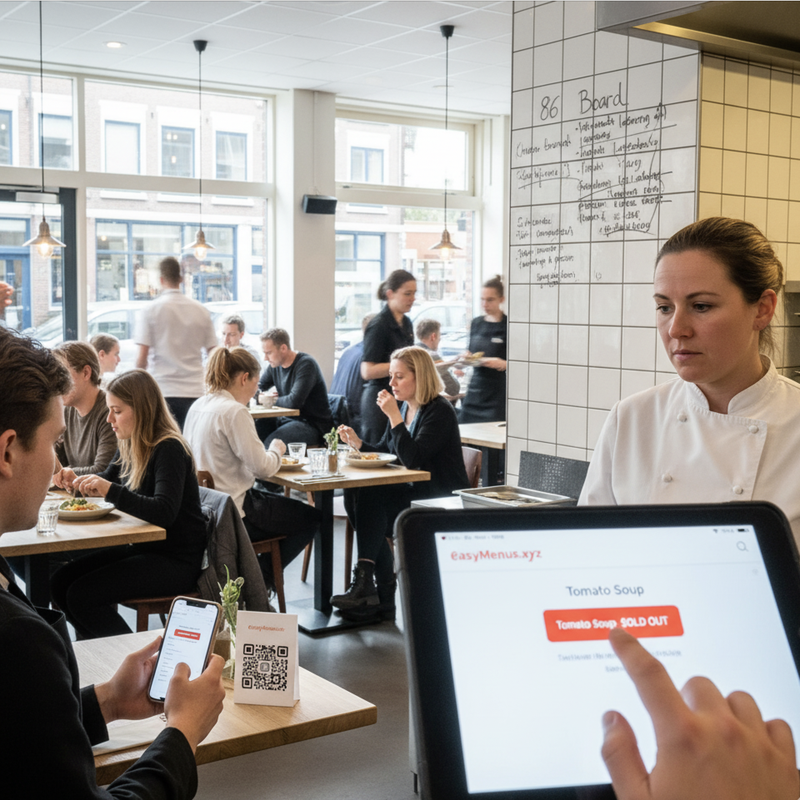
Tuesday 12:30pm. Lunch rush at full speed. Every table occupied. Forty covers. Your kitchen is moving dishes fast.
Table eight orders soup of the day. Your server writes it down, heads to the kitchen pass. Calls the order. Your expo looks up from expediting.
"Soup's been 86'd since 11:45am."
Your server's face falls. That's the eighth time today she's had to apologize for something being unavailable that's still on the printed menu. Eighth time. Before 1pm.
She walks back to table eight. Apologizes. The customer looks annoyed - she specifically came for the soup. Saw it on the menu when she sat down three minutes ago. Now it's not available?
"Can you do the salad instead?" your server offers.
The customer reluctantly agrees. Orders a sandwich. Should have been a €12 soup order. Became a €9 sandwich order because your printed menu couldn't update mid-service.
That interaction took 90 seconds. Ninety seconds during lunch rush when your server should be taking orders at three other tables. Multiply that by eight apologies before 1pm and you've lost twelve minutes of server productivity during your busiest two hours.
Lisa's Utrecht Lunch Café
Lisa runs a 50-seat lunch spot two blocks from Utrecht Centraal. Office workers, university students, tourists. Quick turnover restaurant, high volume operation, tight profit margins.
Her business model depends on daily specials. Soup changes daily. Sandwich special rotates. Today's salad uses whatever produce arrived fresh that morning. This approach keeps food costs down (she can buy what's on sale from suppliers), keeps the menu interesting (regulars return to see what's new), and handles supply chain unpredictability (if lettuce is wilted, she pivots to roasted vegetables).
Problem: her printed menu can't keep up with lunch service reality.
Soup of the day sells out by noon on busy days. Stays listed on the printed menu until tomorrow morning's reprint.
Sandwich special runs out of a key ingredient. She substitutes something similar. Menu shows the original version with original ingredients.
Daily salad changes based on what actually arrived from the supplier that morning. Monday afternoon she prints Tuesday's menu showing Tuesday's planned salad. Tuesday morning the lettuce arrives wilted. She makes a completely different salad. Menu shows yesterday's plan, not today's reality.
Special of the day was so popular yesterday that she made extra today. Wants to feature it. Can't add it to the printed menu.
Between 11:30am and 2pm—her peak lunch window—Lisa's printed menu is wrong about something in roughly 40% of customer orders.
That's not an exaggeration. She tracked it for two weeks. Four out of every ten tables ordered something that either: wasn't available, had been substituted with different ingredients than listed, or wasn't on the menu at all but was actually available.
"My servers spent more time apologizing than serving," Lisa said. "And customers thought we were disorganized or unreliable. We weren't. We were responding to normal lunch service reality. Our menu just couldn't update during service, so it was always showing yesterday's information."
The Thursday Problem
Thursdays are Lisa's busiest lunch day. Office workers expensing meals before Friday. Students between morning and afternoon classes. Tourists heading to or from Amsterdam.
Lisa preps sixty portions of soup on Thursdays. That's 20% more than any other weekday. She knows Thursdays are busy.
Last Thursday the soup was tomato basil with fresh mozzarella. Popular. Priced at €8.50. Good margin.
It sold out at 12:15pm. Forty-five minutes into lunch service.
For the next 90 minutes—from 12:15pm until service slowed at 1:45pm—Lisa's servers took soup orders from customers looking at printed menus that clearly listed "Soup of the Day: Tomato Basil with Mozzarella - €8.50."
Each time:
Server writes down the soup order. Walks to the kitchen pass. Calls it to expo. Expo shakes head. "Been 86'd since 12:15."
Server walks back to the table. Apologizes. "I'm so sorry, we actually just sold out of the soup." Suggests the daily salad or the sandwich special as alternatives.
Customer reactions varied:
Some ordered alternatives immediately. (Maybe 50% of soup orders.)
Some looked skeptical—"Your menu says soup of the day" while pointing at it. Server explains it sold out. Customer reluctantly orders something else. (Maybe 30%.)
Some just asked for the bill and left. "We came specifically for soup. Thanks anyway." (Maybe 20%.)
Fifteen soup orders during those 90 minutes. Lisa tracked them.
Eight became alternative orders (salads, sandwiches). Seven tables asked for the bill and left. Average ticket for those seven tables would have been €15-18 per person (soup + drink + maybe dessert). Total lost revenue: approximately €210-250 that one Thursday lunch service.
But the money wasn't even the worst part.
"My servers felt terrible," Lisa said. "They're apologizing constantly. They know customers are annoyed. They know it makes us look disorganized. And there's nothing they can do about it. The printed menu says soup. The soup is gone. They're stuck in the middle."
One server, Emma, has worked for Lisa for two years. Excellent server. Knows the regulars. Handles stress well.
After that Thursday shift, Emma asked if they could just write "LIMITED AVAILABILITY" next to the soup on every menu.
"But then customers will be hesitant to order it even when we have plenty," Lisa explained. "And it doesn't solve Friday when we run out of sandwich ingredients but the menu shows the original sandwich."
Emma knew she was right. "I just hate apologizing all day. Makes me feel incompetent. Like I should have known, even though there's no way I could have unless I check with the kitchen before every single order."
That's exactly the problem. In theory, servers could check availability of every item before taking each order. In reality, during lunch rush with forty covers and tables turning every 35 minutes, checking availability isn't feasible. Servers are moving too fast.
So they trust the menu. And the menu is wrong. And they apologize. Every day.
What Printed Menus Can't Do
Mid-service updates are impossible with printed menus. Once lunch service starts at 11:30am, whatever's printed is what customers see for the next three hours. You can't change it.
Soup runs out? Can't change the menu. Special sells out? Can't change the menu. Ingredient substitution required? Can't change the menu. New batch of something ready? Can't add it mid-service.
Restaurants have three options, all bad:
Option 1: Servers memorize what's actually available and what's been 86'd. Works poorly. They forget during rush. New staff don't know. Customers order based on menu, server has to correct them, awkwardness ensues.
Option 2: Kitchen writes 86'd items on a whiteboard visible to servers. Servers check it before taking orders or after customers order. Slows service significantly. Customers get impatient waiting for server to confirm availability. Board gets messy during busy service. Still doesn't help with substitutions or additions.
Option 3: Accept that the menu is wrong and apologize constantly. Lisa's choice before switching. Cheaper than reprinting hourly. Terrible for customer experience and server morale.
None of these options work well. All of them make you look disorganized even when you're managing lunch service perfectly well. The issue isn't operations. It's that printed menus are fixed documents in a dynamic environment.
What Digital Menus Actually Do
Lisa switched to digital menus in January.
Setup took twenty minutes. She photographed her printed menu (just the regular items, not daily specials). System extracted the text. She reviewed it, fixed one typo, added a few descriptions she'd always wanted to include but didn't have space for on printed version. Published.
Now mid-service updates happen in real time:
Soup runs out at 11:45am?
Kitchen expo marks it "sold out" on the kitchen tablet. Takes fifteen seconds. Every customer scanning a QR code after 11:45am sees either "Today's soup (sold out)" or the soup disappears from the menu entirely, depending on how Lisa configured it.
No disappointed customers ordering unavailable soup. No apologizing servers. No awkward "we're actually out of that" conversations.
Sandwich special needs ingredient substitution?
Lisa gets a text from her supplier Tuesday morning: "Cheddar delivery delayed, arriving tomorrow."
Her sandwich special today is "Smoked Turkey & Aged Cheddar Panini." Can't make it without cheddar. She has gouda in the cooler.
She opens the digital menu on her phone at 10am. Finds the sandwich. Updates description to "Smoked Turkey & Gouda Panini (gouda substituted today)." Publishes. Takes 30 seconds.
Customers scanning at 11:30am see the accurate description with today's actual ingredients before ordering. No surprises. No feeling misled.
Daily salad changes because supplier sent different greens?
Monday afternoon Lisa printed Tuesday's menu showing "Spring Mix Salad with Goat Cheese & Balsamic." Tuesday morning the spring mix arrives wilted—unusable. She has arugula and roasted vegetables.
With printed menus, she's stuck. Serve the salad as "Spring Mix" even though it's arugula? Verbally correct every order? Cross it off the menu with pen?
With digital menus, she updates it immediately: "Arugula & Roasted Vegetable Salad with Goat Cheese." Published. Customers ordering at noon see today's actual salad.
Fresh bread arrives at 1pm from the bakery?
Lisa's bakery delivers twice daily. Sometimes the 1pm delivery includes extra sourdough that wasn't expected.
She adds it to the digital menu as a bread option. "Fresh Sourdough - just baked - add to any sandwich €1.50." Published at 1:05pm.
Customers ordering at 1:15pm see it. Twelve customers add the fresh sourdough upgrade that afternoon. €18 revenue from something that wouldn't have appeared on printed menus at all.
"The first week, my servers kept walking to the kitchen to confirm availability before taking orders," Lisa said. "Old habit. Then they realized—the menu IS the availability now. What customers see on their phones is what we actually have this minute. They stopped checking. Service sped up. They stopped apologizing."
The Server Experience
Think about your lunch servers during the Thursday rush that Lisa described.
They're taking orders at four tables simultaneously. Running food from kitchen to tables. Clearing finished plates. Processing payments. Answering questions about ingredients. Refilling water. Moving constantly for 90 minutes straight without pause.
Now add: memorize which items are 86'd (soup ran out at 12:15pm, remember that), remember ingredient substitutions (cheddar became gouda on the turkey sandwich, remember that), explain daily specials that aren't listed on printed menus (we have fresh sourdough today, try to mention it), apologize for menu inaccuracies when customers order unavailable items.
It's too much cognitive load. Something fails. Usually it's the menu accuracy part because they're prioritizing everything else.
After Lisa switched to digital menus, Emma (the server who'd asked about "LIMITED AVAILABILITY" labels) noticed the difference immediately.
"Customers ask 'Is the soup still available?' and I can honestly say 'If it's on the menu when you scan, we have it.' I don't have to remember what's 86'd. I don't have to run to the kitchen to check. The menu is accurate right now, in real-time. If it's listed, it's available."
No more apologizing. No more feeling caught between customers and kitchen. No more looking incompetent when the menu is wrong through no fault of hers.
Lisa's server turnover dropped after switching to digital menus. She asked why during exit interviews with staff who'd worked both systems.
Unanimous feedback: lunch shifts became less stressful with digital menus. Less apologizing. Less running back and forth confirming availability. Less feeling like they were failing customers. Less anxiety about memorizing 86'd items during rush.
"I didn't expect that benefit," Lisa said. "I switched to save printing costs and reduce customer disappointment. The staff morale improvement was an unplanned bonus that might be worth more than the cost savings."
The Daily Special Reality
You know how daily specials work in lunch operations.
Monday afternoon you plan Tuesday's specials. You print Tuesday's menu Monday evening showing what you plan to serve Tuesday.
Tuesday morning reality happens:
Your lettuce delivery is wilted. Can't make the planned salad special. Need to substitute with what's actually usable.
Or: Tuesday morning your soup comes out better than expected. You make double batch. Enough for Tuesday lunch AND dinner. But printed menu only shows it for lunch because that's what you planned Monday.
Or: Tuesday afternoon you have leftover roasted vegetables. Make them into Wednesday's special. But Wednesday's menu is already printed showing something different that you planned Monday.
Daily specials require flexibility by definition. Printed menus are fixed by design. That fundamental mismatch causes the problems Lisa experienced.
Digital menus match your operational reality:
Monday night: plan Tuesday specials, publish them to digital menu.
Tuesday morning: supplier issue, update special immediately before any customer orders based on wrong information.
Tuesday afternoon: made extra soup, add it as dinner special immediately.
Wednesday morning: yesterday's leftover special, add it as today's option without reprinting anything.
The menu reflects what's actually happening in your kitchen today, not what you hoped would happen when you printed menus yesterday.
What It Doesn't Fix
Digital menus don't make food magically available. If you ran out of soup, you ran out. They can't create soup that doesn't exist.
They don't eliminate the work of prep. You still need to make the food, plan the specials, manage inventory.
They don't make suppliers more reliable. If lettuce arrives wilted, you still have that problem to solve.
What they eliminate: the information lag between kitchen reality and what customers see on menus.
With printed menus, that lag is measured in hours during service (soup 86'd at 12:15pm but menu shows it till 2pm) or days between services (Monday's printed menu can't reflect Tuesday morning's supplier issues).
With digital menus, the lag is measured in seconds. Soup 86'd at 12:15pm? Update menu at 12:15pm and 15 seconds. Next customer scanning at 12:16pm sees accurate availability.
The operational challenges are the same. The communication lag is eliminated.
The Honest Numbers
Lisa's old system:
- Printed daily menus: €45 per day × 6 days weekly × 50 weeks = €13,500 yearly
- Designer fees for daily special layouts: €600 yearly
- Lost revenue from walkouts (menu inaccuracies): approximately €200 weekly × 50 weeks = €10,000 yearly
- Server time wasted apologizing and confirming availability: roughly 30 minutes daily = €3,900 yearly at €13/hour labor cost
- Total annual cost: €28,000
Lisa's new system:
- Digital menu subscription: €12.50 monthly = €150 annually
- Update costs: zero (unlimited mid-service updates included)
- Walkouts reduced 90%: +€9,000 yearly (better menu accuracy = fewer disappointed customers)
- Server efficiency gained: +€3,500 yearly (less time apologizing, more time serving)
- Additional upsells from real-time adds (fresh bread, extra batches): +€2,400 yearly
- Total annual impact: €32,950 better than printed menu system
Plus intangible benefits:
Server morale significantly improved. Lisa's team reports lunch shifts feel less stressful and chaotic. Less apologizing means less emotional labor. Service speed increased because servers aren't running to kitchen constantly to confirm availability. Customer trust increased - reviews now mention "menu was accurate" instead of complaints about unavailable items.
"The Google reviews actually changed," Lisa said. "We went from occasional one-star reviews saying 'ordered soup, they were out of it, false advertising' to reviews saying 'loved that the menu shows exactly what they have right now.' That reputation shift is worth more than the €30,000 I'm saving."
Try It Tomorrow
Setup takes twenty minutes tonight. Upload your regular menu. Tomorrow morning, publish today's specials. See how it works during actual service.
Tomorrow during lunch rush: when soup runs out, update the menu immediately from kitchen tablet or your phone. Takes fifteen seconds. Watch what happens. Do customers stop ordering unavailable soup? Do your servers stop apologizing?
When you need to substitute an ingredient, update the description in real-time. Do customers notice? Do they appreciate the accuracy?
When something sells out, remove it. When something unexpected becomes available, add it. See if your lunch service runs smoother when the menu matches reality.
Costs €12.50 per month. Try it for 14 days. If your lunch service doesn't improve, if your servers don't mention feeling less stressed, if customers don't respond better to accurate menus, you're out €12.50.
But most Utrecht lunch operators tell us the main change isn't cost savings or efficiency metrics. It's how it feels during the Thursday lunch rush when forty covers are moving and your team isn't apologizing eight times before 1pm.
It's coming home after a brutal lunch service and not feeling frustrated that your menu made you look disorganized when your operation was actually running well.
It's having servers who want to stay because lunch shifts became manageable instead of stressful chaos.
That's what fixing the information lag actually feels like operationally.
[Start 14-day trial - perfect for high-volume lunch operations]
Common Questions
Can kitchen staff update the menu mid-service when something sells out? Yes. Most lunch operations give kitchen managers or expo staff tablet access at the pass. When something sells out, they mark it unavailable immediately - takes the same fifteen seconds as calling "86" to the servers. Doesn't interrupt service flow. Some places keep the tablet right at the expo station for real-time updates.
What if we're too busy during lunch rush to update the menu? Takes fifteen seconds. Most kitchens find that updating the digital menu is faster than writing items on an 86 board and explaining to servers what's unavailable. One tap on tablet vs. shouting updates across busy kitchen. Plus, once it's updated digitally, it stays updated—no risk of servers forgetting or new staff not seeing the board.
Do customers get confused by menus that change during service? No - they expect daily specials to potentially sell out during lunch rush. What frustrates them is ordering something that's already gone. Digital menus prevent that frustration by showing current availability. Customers appreciate accuracy over static menus that lie.
What about ingredient substitutions - do I need to update every detail? Your choice. Most places update major substitutions (cheddar became gouda) but don't mention minor ones (red onion instead of yellow onion). Takes 30 seconds to add "gouda substituted today" to a sandwich description. Prevents customers with cheddar allergies from ordering and prevents disappointment from people who specifically wanted cheddar.
Can servers access the menu system to check availability without bothering kitchen? Yes. Servers can view the current menu on their phones or a shared tablet. If a customer asks "do you still have soup?" the server can check the digital menu instantly without calling to kitchen. Speeds service and reduces kitchen interruptions during rush.
What if my internet goes down during lunch service? Once customers scan the QR code, the menu loads on their phone and stays accessible even if your internet drops. They can still browse and order. You just can't publish updates until internet returns. Most places never experience this issue, but even if it happens, customers still have menu access.
Related Compliance & Cost Stories:
- The Tuesday Morning Email That Cascades Into €4,000 Yearly
- The Amsterdam Allergen Crisis: €47,000 From Menu Information Lag
Related Operational Flexibility:
- The Rotterdam Fish That Arrived Monday: Why Fresh Can't Wait
- Antwerp Beer List: When 180 Beers Change Faster Than Printing
Related Market-Specific Insights: