
Edinburgh vs Glasgow: Student Markets vs Tourist Digital Menu Adoption (£5,000+ Savings)
Glasgow's 115,000 students expect QR codes. Edinburgh's 2.3M tourists need multilingual menus. Same technology, different adoption rates. £5,000+ annual printing savings both cities.
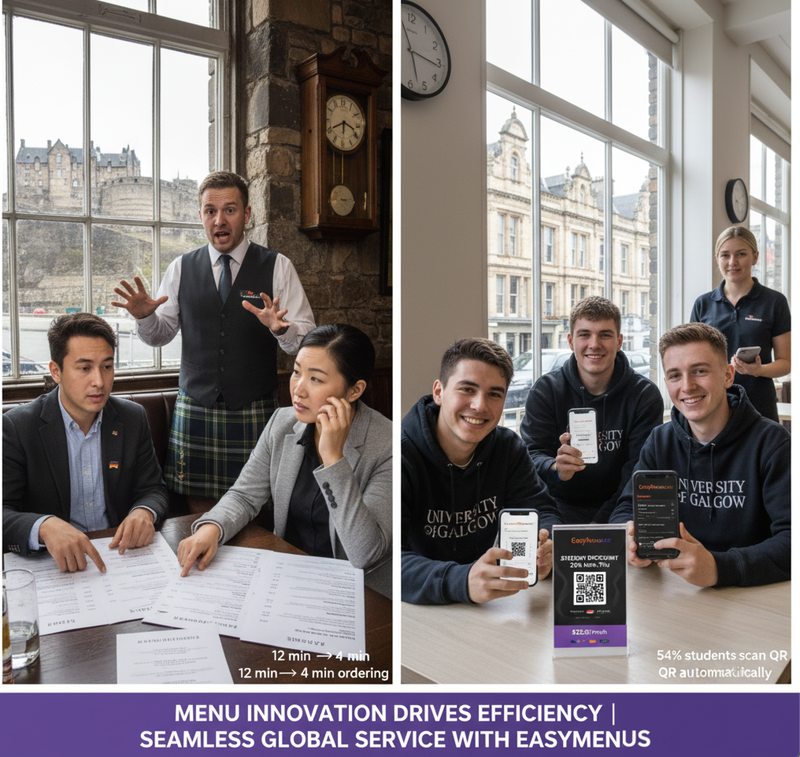
Half ten Wednesday night. You're finally sitting with a pint after brutal service, checking phone. Seafood supplier: those langoustines everyone orders? Season's ending early. New catch costs £45 more per case. New menus. Again.
Add it up. Every produce supplier price change. Every craft beer that sells out after three days. Every seasonal changeover. Every daily special differing Monday through Friday. Probably £800 annually. Maybe £1,500. Possibly £5,000 if you're running a Leith establishment with Michelin ambitions.
Glasgow restaurants adopt digital menu solutions 20-30% higher than Edinburgh establishments. Not because Edinburgh operators don't understand technology. Because 115,000 students create fundamentally different customer expectations than 2.3 million international tourists.
The Tale of Two Scottish Cities
Edinburgh's Royal Mile, Saturday afternoon. Count the languages. Japanese. American. French. German. Spanish. Every third table tourists asking questions your printed menu can't answer. "What's haggis?" "Is this gluten-free?" "Menu in German?" "What exactly is Cullen skink?"
Staff explaining the same Scottish food heritage fifty times per shift. Printed menu lists dishes. Doesn't explain 500 years of culinary history. Doesn't translate "neeps and tatties" for tourists from Tokyo. Doesn't show what proper Scottish breakfast looks like to someone who's never left California.
Byres Road, Glasgow's West End, Tuesday evening. Students everywhere. University of Glasgow. Strathclyde. Glasgow School of Art. 115,000 students representing 18-20% of city population. They're checking phones. Scanning QR codes without thinking. Comparing prices. Looking for student discounts.
They expect digital. Of course there's QR code. They use them for campus services, contactless payments, checking library books. QR codes are just... normal. And when you don't have one? They're confused. "Do I need to... wait for a menu?"
Glasgow restaurants see faster digital adoption because student culture means:
- 115,000 digital natives expecting seamless tech integration
- Budget-conscious customers actively seeking deals via email
- Repeat local dining (not one-time tourism) builds ongoing relationships
- Mid-market £15-20 price point perfect for QR ordering
- Neighborhood focus values customer loyalty programs
- 54% of 18-29 age group already use QR codes for marketing
Edinburgh's strength—international tourism and premium positioning—becomes complication. Tourists want authentic Scottish experiences. Printed menus feel traditional. QR codes feel... impersonal? Corporate? Wrong?
Except they're not. When done right, digital menus tell better stories than printed ones ever could.
What The Numbers Show
Edinburgh Profile:
- Population: 523,250 in city proper
- Tourism: Extreme—2.3M international visitors annually (highest in Scotland)
- Student population: 49,500 (University of Edinburgh)
- Average salary: £40,846/year (highest in Scotland)
- Tourism spending: £2 billion annually
- Festival impact: Edinburgh Fringe brings 3.2M attendances, £407M economic impact
- Restaurant scene: Michelin concentration Leith, Royal Mile tourist focus, premium positioning
Glasgow Profile:
- Population: 632,000 (Scotland's largest)
- Student focus: Massive—115,000 students (2nd largest UK after London, 18-20% of population)
- Average salary: £30,000-35,000 (lower than Edinburgh)
- Demographics: 30% households earn under £20,000/year (budget-conscious)
- Domestic tourism: 4.72M overnight visitors (more UK/domestic than Edinburgh's international)
- Restaurant scene: Mid-market dominance (£15-20 spend), 70% independent new openings, neighborhood-focused
Both cities have exceptional food. Operational realities couldn't be more different.
Edinburgh Reality: 2.3 Million Questions You Can't Answer
Timberyard on Lady Lawson Street. Michelin-starred. Seasonal tasting menus. Daily changing ingredients from Scottish suppliers. Customers? International food tourists. First-time visitors who flew to Scotland specifically for this meal. People needing Scottish cuisine explained.
The Palmerston, West End? Daily menu changes based on market fresh. Natural wine list shifting constantly. Reprinting constantly. But it's part of Edinburgh's sophisticated dining culture. Physical menus you can study feel premium.
Dine Edinburgh, Cambridge Street? Michelin-starred chef. Multiple daily menus: lunch, pre-theatre, dinner. Using PDF menus. Why? Because when you're established restaurant with affluent clientele, changing systems feels risky.
This isn't hypothetical. This is cultural tension in Edinburgh. Tourism revenue versus operational efficiency. Premium experience versus practical solutions. Heritage versus innovation.
The Printing Cost Reality
Edinburgh premium restaurant reality:
- Seasonal menu changes: £300 × 6 times/year = £1,800
- Wine list updates: £250/month × 12 = £3,000
- Festival special menus (August): £400
- Allergen information sheets: £60/quarter × 4 = £240
- Annual printing total: £5,440
The Palmerston's daily challenge:
- Daily menu changes based on market availability
- PDF-only menus requiring website updates
- No digital menu system despite constant flux
- Staff explaining changes repeatedly
- Annual printing estimate: £4,000+
Montrose Restaurant complexity:
- Natural wine focus requiring detailed descriptions
- Seasonal ingredient-led cooking with weekly changes
- Small plates format needing clear explanations
- Flexible menu system essential but lacking
- Annual printing estimate: £3,500+
£3,500-5,500 annually telling customers information that could update instantly on phones. In multiple languages. With photos showing what "haggis, neeps and tatties" actually looks like.
Every reprint? 5-7 days waiting for print shop. Five days of "sorry, we changed that" conversations with tourists holding menus saying it's available.
Glasgow Difference: When Your Customers Are Broke Students
The Finnieston on Argyle Street? Popular seafood spot. Daily menu changes based on catch. Who eats there? Students celebrating special occasions. Young professionals. Local West End residents.
Not international tourists documenting everything for Instagram back in Tokyo. Not Americans on once-in-a-lifetime Scotland trips. People who live in Glasgow. Who come back. Who check email for deals.
Dennistoun Bar-B-Que? Strong local following. Manual ordering. Paper menus. Customers are Dennistoun residents. Students from nearby. People looking for value.
Torrisdale Tavern? Changing specials every week. Promotions needing easy updates. Quiz nights. Live music. Events benefiting from instant digital communication.
Edinburgh drivers:
- "International tourists ask questions we can't answer efficiently"
- "Michelin expectations mean everything must feel premium"
- "Festival surge in August overwhelms standard operations"
- "Multiple language needs exceed printed menu capacity"
- "One-time visitors won't engage with future marketing"
Glasgow drivers:
- "Students expect QR codes and get confused without them"
- "Daily specials management takes too much time"
- "Budget-conscious customers actively look for deals"
- "Local regulars want loyalty programs and discounts"
- "Neighborhood competition means staying current matters"
Both valid. Both real. Student culture creates different urgency.
What Actually Works
UK restaurant QR adoption data—70%+ have integrated QR codes. But age breakdown showing why Glasgow's student population matters:
- 18-29 years: 54% scan QR codes for marketing/menus
- 30-44 years: 48% scan QR codes
- 45-64 years: 38% scan QR codes
- 65+ years: 31% scan QR codes
Glasgow's demographic advantage: 115,000 students aged 18-24 representing 18-20% of city population. The exact demographic that automatically scans QR codes without being asked.
Edinburgh's demographic challenge: International tourists skew older. Heritage tourism attracts 45+ demographics. Premium dining customers older on average. The exact demographics least comfortable with QR technology.
The Finnieston's opportunity: Seafood restaurant with daily changing catch. Previously reprinting constantly. Switch to digital: Update langoustine offerings instantly when sold out. Add detailed Scottish seafood descriptions. Include photos showing exactly what "hand-dived scallops from Isle of Skye" looks like. Staff stops explaining the same regional seafood twenty times a service.
Torrisdale Tavern's efficiency gain: Weekly changing specials, quiz nights, live music events. Reprinting expensive and slow. Digital solution: Update special offers immediately. Promote events instantly to regulars. Create custom menus for private bookings without printing charges. Modern presentation matching neighborhood vibe.
The Student Discount Culture
Glasgow: student discounts baked into dining culture. 115,000 students from multiple universities create economy around affordable eating.
Universities actively promote student discount schemes. Students habitually check email for deals. Budget consciousness isn't shame—it's smart resource management. 30% of Glasgow households earn under £20,000 annually. Value seeking is cultural.
Bag O' Nails in Glasgow: Late-night menu coordination, live music venue. Customers? Students before gigs. Young professionals after work. Locals seeking neighborhood atmosphere.
Digital menus let them: Promote student discount nights instantly. Update late-night menu when kitchen closes early. Coordinate live music schedules with food service. Build email lists for event notifications. All without printing anything.
Edinburgh's different reality: International tourists don't care about student discounts. Premium diners expect full-price sophistication. Festival visitors pay tourist prices. Email marketing value proposition simply doesn't exist the same way.
This doesn't mean Edinburgh restaurants can't benefit. But ROI calculation differs. Glasgow's local repeat business builds ongoing customer relationships. Edinburgh's transient tourism creates one-time transactions.
The Wine List Nightmare
Scotland's natural wine scene thriving. Edinburgh and Glasgow both have extensive, constantly-changing wine programs. Managing wine lists with printed menus? Expensive and frustrating.
Montrose Restaurant wine reality:
- Natural wine focus with seasonal selections
- Small-producer bottles sell out within days
- Describing natural wines requires detail printed lists can't provide
- Reprinting every time bottle sells out: £250/month
Leftfield's complexity:
- Seasonal menu changes requiring website updates
- Minimal digital presence despite sophisticated cooking
- Wine pairings coordinating with rotating dishes
- Keeping everything synchronized: £200/month in updates
The Palmerston's daily challenge:
- Daily menu changes based on market availability
- Wine recommendations shifting with dishes
- PDF menus mean website updates required constantly
- Coordination time and reprinting: £300/month
Digital wine lists solve this immediately. Bottle sells out? Remove instantly. New vintage arrives? Update description and price in 30 seconds. Pairing recommendations change with menu? Adjust real-time.
No more "sorry, we sold the last bottle yesterday." No more rushed reprinting when supplier substitutes different wines. Just current, accurate information. With tasting notes. With pairing suggestions. With stories about the winemaker.
The Festival Surge Problem
Edinburgh's August reality: Edinburgh Fringe brings 3.2M attendances. Population effectively doubles. Restaurant revenue increases 37% in festival week one. Then drops back September.
Royal Mile restaurants face this annually:
- Print extra menus for August surge (£500-800)
- Simplified menus for high-volume efficiency
- Multilingual tourist needs (German, French, Spanish, Japanese)
- Staff overwhelmed explaining Scottish dishes
- September overstocked with printed menus becoming outdated
With digital menus:
- Scale instantly for August (no extra printing)
- Translate automatically into multiple languages
- Update based on ingredient availability during high-volume periods
- Track what tourists actually order for next year's planning
- Switch back to regular menu seamlessly in September
- Total additional August cost: Zero
The Palmerston could handle festival surge better: Instead of simplified printed menus during busy periods, maintain full menu digitally with instant updates when ingredients run low. Staff focus on service, not explaining dishes repeatedly in multiple languages.
Glasgow doesn't have this specific challenge. But principle applies: digital menus handle operational peaks without additional printing investment.
What This Actually Costs
Digital menu cost: £12.50/month
What you eliminate:
- Menu reprinting: £200-600/month depending on frequency
- Wine list updates: £300-500/month for active programs
- Specials boards: £100-200/month for daily changes
- Allergen sheets: £50-100/month for regulatory compliance
- Staff time explaining: 2-5 hours/week at £15/hour = £120-300/month
Edinburgh tourism-heavy restaurant savings:
- Printing elimination: £400/month = £4,800/year
- Staff efficiency: £200/month = £2,400/year
- Professional presentation value: Qualitative
- Total annual savings: £7,200+
- Digital menu cost: £150/year
- Net savings: £7,050/year
Glasgow student-focused restaurant savings:
- Printing elimination: £250/month = £3,000/year
- Staff efficiency: £150/month = £1,800/year
- Loyalty program value: Significant
- Total annual savings: £4,800+
- Digital menu cost: £150/year
- Net savings: £4,650/year
Both scenarios show clear ROI. Different motivators, same financial benefit.
The Bottom Line
Glasgow's student culture and local dining create faster digital adoption:
- 115,000 students aged 18-24 (54% automatically scan QR codes)
- Budget-conscious culture actively seeking deals via email
- Repeat neighborhood dining builds ongoing relationships
- Mid-market £15-20 price point perfect for digital ordering
- Independent-dominated market (70% new openings) means agile decisions
Edinburgh's tourism and premium positioning create different patterns:
- 2.3M international tourists (transient, one-time visits)
- Premium fine dining concentration (traditional service valued)
- Festival surge creates seasonal volatility (August spike, quieter winters)
- Strong digital opportunity in residential neighborhoods (Stockbridge, Leith, Bruntsfield)
- Local areas mirror Glasgow's dynamics perfectly
Both markets benefit from digital menus. Glasgow adopts faster because student expectations and local relationships make value obvious. Edinburgh adopts selectively because tourist areas differ from residential neighborhoods.
Cost: £12.50/month
Setup time: 3 minutes
Savings: £1,000-5,000+/year depending on menu change frequency
Payback period: Less than one month
Risk: £12.50 to try it. If you hate it, back to print shop.
Eliminate printing costs and serve Glasgow's 115,000 students in the format they expect—set up digital menu in 3 minutes. Unlimited updates, allergen information included, £12.50/month. One menu reprint costs more.
Frequently Asked Questions
Why do Glasgow restaurants adopt digital menus faster than Edinburgh establishments?
Glasgow's 115,000 students (18-20% of city population) create fundamentally different customer expectations than Edinburgh's 2.3M international tourists. Students aged 18-29 show 54% QR code usage for marketing/menus versus 31% for tourists aged 65+. Glasgow's budget-conscious culture (30% of households under £20,000/year) actively seeks deals via email, while Edinburgh's transient tourism creates one-time visitors unlikely to engage with future marketing. Glasgow's mid-market dominance (£15-20 average spend, 75% of market) fits perfectly with QR ordering efficiency.
How much do Scottish restaurants actually save switching from printed to digital menus?
Edinburgh premium restaurants save £4,500-6,000 annually: printing elimination (£3,000-4,000/year), festival surge menus (£400-800), wine list updates (£1,000-1,500/year). The Palmerston's daily menu changes cost £4,000+/year in constant reprinting and PDF updates. Montrose Restaurant's natural wine focus with seasonal changes costs £3,500+/year. Digital menus cost £150/year (£12.50/month), creating net savings of £3,500-5,850. Glasgow mid-market restaurants save £2,500-4,000 annually through reduced printing and daily specials management.
How do digital menus help Edinburgh restaurants handle the August festival surge?
Edinburgh Fringe brings 3.2M attendances causing 37% restaurant revenue increase in week one, then September drop-off. Traditional approach requires: printing extra menus for August (£500-800), simplified high-volume menus, multilingual copies (German, French, Spanish, Japanese), overstocking that becomes outdated September. Digital menus scale instantly for August without additional printing, translate automatically into tourist languages, update based on ingredient availability during high-volume periods, track what tourists actually order for next year's planning, switch back to regular menu seamlessly September. Total additional August cost: Zero.
What advantages do Glasgow's 115,000 students create for restaurant digital adoption?
Students represent 18-20% of Glasgow's population across University of Glasgow (40,000), Strathclyde, Glasgow Caledonian, and Glasgow School of Art. The 18-29 age group shows 54% QR code usage (highest of any demographic), creating automatic scanning without prompting. Students actively check email for deals (university promotes student discounts, budget consciousness normalized), creating high email marketing engagement. Mid-market £15-20 price point where students dine frequently matches QR ordering sweet spot. Tech-savvy expectations mean digital menus aren't "innovative"—they're baseline expected.
How does Edinburgh's tourism focus affect email marketing effectiveness compared to Glasgow?
Edinburgh's 2.3M international tourists create one-time visitor problem: email lists filled with contacts unable to return for future offers (German tourist back in Berlin can't use your discount), transient customer base means low ongoing engagement, festival August creates large email lists with poor September-onwards response. Glasgow's repeat neighborhood dining creates ongoing relationships: West End residents eat in West End repeatedly, email marketing to locals drives return visits, budget-conscious culture actively seeks promotional emails, student discount culture normalizes email checking for deals.
Related Articles: