
The Rotterdam Fish That Arrived Monday But Your Menu Says Thursday
Supplier texts: "Fresh halibut, 12 portions, pickup today." With printed menus, you can't add it. Rotterdam seafood restaurant lost €850 in one weekend.
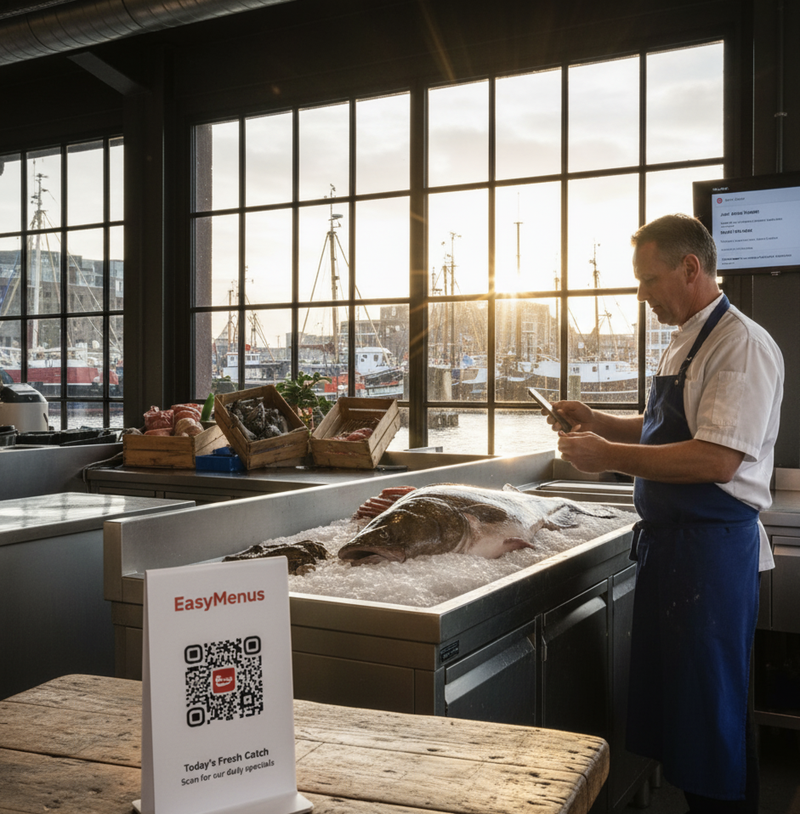
Your supplier texts Thursday 3:15pm: "Fresh turbot. Caught this morning. Eight portions only. Can you pick up today?"
Beautiful fish. Premium quality. You could charge €42 per portion. €20 profit margin per plate.
But your printed menu says "Catch of the Day: Sea Bass €32" because that's what was available when you went to press last week.
You've got three options:
- Make a chalkboard (your handwriting, tourists can't read it, looks cheap for €42 fish)
- Tell servers to mention it verbally (they'll forget during rush, or customers won't believe the price)
- Skip it (lose €160 profit opportunity because your menu can't move fast enough)
You make the chalkboard. Sell three portions. The other five go to staff meal Sunday because fresh turbot doesn't last.
Lost opportunity: €420 revenue. €100 profit. Gone because printed menus take a week to update.
Peter's Rotterdam Seafood Restaurant
Peter runs a 40-seat seafood place in Rotterdam's old harbour. His concept depends on fresh catch. Whatever the boats bring in, that's what he serves.
Problem: Boats don't coordinate with his printing schedule.
His menu shows four fish options. Sea bass, cod, plaice, salmon. Those are his reliable options—suppliers always have them, prices stay relatively stable, he can print them and know they'll be accurate for a few weeks.
But the premium opportunities? Dover sole for three days in November. Wild turbot when weather permits. Line-caught sea bream when the boats get lucky. Those sell for €38-55 per plate. €18-25 profit margins. Way better than his menu regulars at €28-32.
He can't add them to printed menus. By the time new menus print, the fish is gone.
"I was leaving money on the table every week," Peter said. "Not because I couldn't get good fish. Because my menu couldn't keep up with what I actually had."
The worst was a Friday in October. His supplier called at 2pm. Wild sea bream, exceptional quality, twelve portions available for weekend pickup. €48 per plate pricing, €22 profit margin.
Peter made a chalkboard. Put it by the entrance. Told his servers.
Friday night: Sold one portion. To a regular who asked "what's special tonight?" Most customers never saw the chalkboard. Most tourists can't read Peter's handwriting.
Saturday: Sold two portions. One to a Dutch local who spotted the chalkboard. One to a couple whose server remembered to mention it.
Sunday: Gave the remaining nine portions to staff. Fresh fish doesn't wait.
Lost revenue: €432. Lost profit: €198. From one weekend. Because his menu couldn't move fast.
What Digital Menus Actually Do
Peter switched to digital menus in November.
Setup took him about 30 minutes. Photographed his regular menu. System extracted it. He reviewed, approved.
Now when his supplier texts about fresh catch, Peter adds it to the digital menu immediately. From his phone. While walking to the supplier's van to pick up the fish.
Takes about two minutes:
- Add new dish: "Wild Turbot - caught this morning"
- Set price: €42
- Add photo (he photographs it when it arrives)
- Click publish
Every table's QR code shows the update within seconds.
First weekend after switching: Supplier called Thursday afternoon. Fresh John Dory, ten portions. €45 per plate.
Peter added it to his digital menu at 4:15pm Thursday. Customers scanning QR codes at 6pm saw "Fresh John Dory - landed this morning - €45" automatically at the top of his seafood section.
Friday night: Sold four portions. Saturday: Sold six portions. Sunday morning: Sold out. Updated menu to remove it. Took 15 seconds.
€450 revenue. €200 profit. From fish that would have gone to staff meal with printed menus.
"The game changed completely," Peter said. "Now when suppliers call with special catch, I say yes every time. Because I know I can actually sell it."
The Daily Reality
You run seafood in Rotterdam. You know what I'm talking about.
Monday your supplier has cod. Tuesday it's plaice. Wednesday the boats stayed in because of weather. Thursday they came back with whatever they caught.
Printed menus show what you had when you went to press. Not what you have today.
So you either:
- Print conservative menus showing only guaranteed items (miss all premium opportunities)
- Print ambitious menus showing what you hope to have (disappoint customers when you're sold out or weather changed availability)
- Print generic menus and rely on verbal specials (works poorly with tourists, staff forget during rush)
None of these options are good.
Digital menus match reality. What's available today is on the menu today. What sold out is removed immediately. What the boats brought in this morning is added this afternoon.
Your menu becomes honest. Customers see what you actually have, right now, with current prices.
The Seasonal Problem
Fresh catch isn't the only thing that changes.
Mussels season: September through April. You want them prominent on your menu during season. Gone completely in summer.
Oysters: Available year-round but quality varies seasonally. You charge more for premium winter oysters than summer ones.
Lobster: Supplier prices fluctuate weekly based on catch and weather. Your printed menu shows €55. Your actual cost this week requires €62 to maintain margin.
With printed menus, you're constantly behind. Either absorbing cost increases, disappointing customers about availability, or manually updating prices with printed stickers (looks cheap).
Annemiek runs a seafood brasserie in Scheveningen. Tourist location, lots of Germans and Brits expecting fresh North Sea seafood.
She used to reprint monthly during mussel season because availability and pricing changed constantly. Off-season, she reprinted quarterly. Cost her €2,800 yearly just for menu printing.
"The worst part wasn't the cost," Annemiek said. "It was feeling like my menu was lying to customers. They'd order something, I'd have to tell them we're out or the price is different. Made me look disorganized."
After switching to digital menus:
Mussel season starts? She adds the mussel section to her menu. Takes five minutes. All varieties, sizes, preparations clearly listed with current prices.
Supplier raises prices? She updates them immediately. No multi-week lag waiting for reprints.
Sold out of large oysters? She marks them unavailable in the menu in real time. Next customer scanning QR code doesn't see them.
Boats bring in exceptional langoustines? She adds them as a special. Photos from her phone, description written in two minutes, published instantly.
"My menu finally matches my kitchen," she said. "Whatever we actually have, that's what customers see."
What It Doesn't Solve
Digital menus don't make fish more available. If the boats don't go out, you still don't have fresh catch.
They don't make suppliers more reliable. If your cod supplier runs out, you still need to find cod elsewhere or offer alternatives.
They don't eliminate the work of managing daily specials. You still need to check what's available, decide on pricing, write descriptions.
What they do: eliminate the lag between having something and customers knowing about it.
With printed menus, that lag is measured in weeks. With digital menus, it's measured in minutes.
The work is the same. The timing is different. And in seafood, timing is everything.
The Honest Numbers
Peter's old system:
- Printed menus: €220 per update
- Updated every 3-4 weeks
- Missed 2-3 premium fish opportunities per month
- Lost profit per missed opportunity: €150-200 average
- Annual cost: €2,640 printing + ~€4,800 lost opportunities = €7,440
Peter's new system:
- Digital menu: €12.50 per month = €150 annually
- Updates daily as needed (zero additional cost)
- Captures nearly all premium fish opportunities
- Added revenue: ~€5,000 annually
- Net improvement: €12,290 yearly
That's not counting reduced waste (less fish going to staff meal), better customer satisfaction (menu matches reality), or time saved (updates take minutes, not coordination with printers).
Try It This Week
Setup takes 30 minutes. Upload your current menu. Start using it with your regular items.
Next time your supplier texts about fresh catch, add it immediately. From your phone. See how it works.
Update it when you sell out. Remove it when it's gone. Add tomorrow's catch when it arrives.
Use it for a week. See if it changes how you think about specials and daily availability.
Costs €12.50 per month. Try it for 14 days. If managing daily fresh catch doesn't get easier, you're out €12.50.
But most Rotterdam seafood places tell us they wish they'd switched before the season started. Because once you can update your menu as fast as boats bring in fish, you stop leaving money on the dock.
[Start 14-day trial - perfect for seafood operations]
Common Questions
Can I update the menu from the fish market? Yes. Phone, tablet, any device. Most seafood restaurants add fresh catch while physically at the supplier, before they even bring the fish back to the kitchen.
What if I sell out mid-service? Remove it from the menu immediately. Takes 15 seconds. Next customer scanning QR code won't see it. No disappointed orders.
Can I show photos of the actual fish? Yes. Most seafood places photograph exceptional catch and add photos directly from their phone. Customers see exactly what they're getting.
Do customers actually check menus on their phones for daily specials? About 80% of customers scan QR codes at seafood restaurants (higher than average). They expect fresh catch to change, so they check the current menu rather than assuming it's the same as last week.
What about tourists who don't speak Dutch? Digital menus can show multiple languages automatically based on phone settings. English for British tourists, German for German tourists, Dutch for locals. All see the same daily fresh catch, just in their language.
Related Compliance & Cost Stories:
- The Tuesday Morning Email: Why Printed Menus Can't Keep Up
- The Amsterdam Allergen Crisis: When Supplier Changes Can't Update Fast Enough
Related Operational Flexibility:
- The Utrecht Lunch Rush: Why 86'd Items Need Real-Time Updates
- Antwerp Beer List: 180 Varieties That Change Daily
Related Market-Specific Insights: