
The Catch That Changed Everything: Howth Seafood
Declan's boats brought different fish daily. His printed menu showed Monday's catch. Tuesday's customers ordered fish that wasn't there. Not anymore.
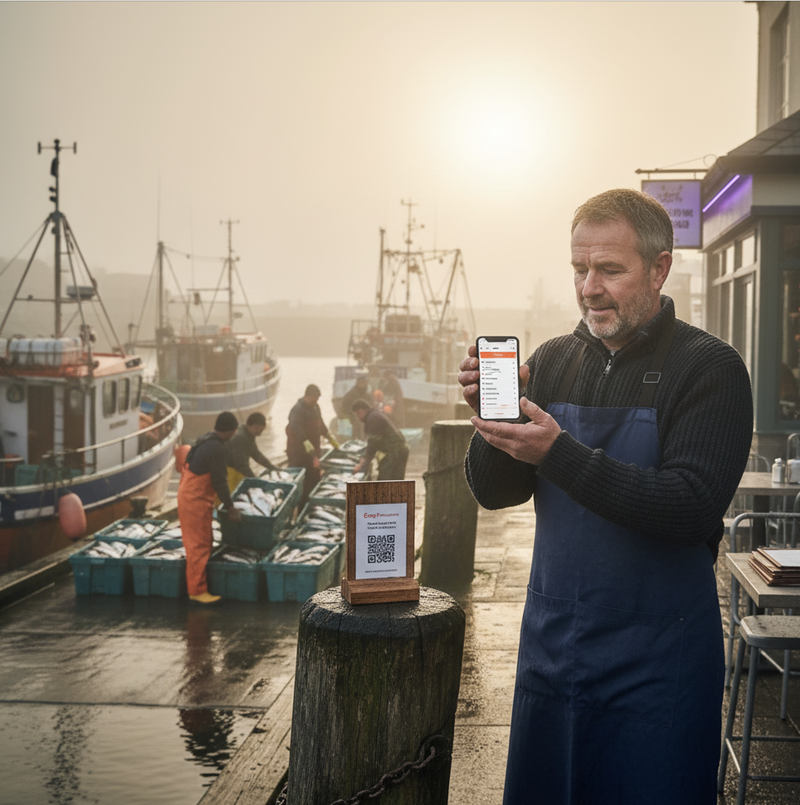
The Catch That Changed Everything (And Why Monday's Menu Killed Tuesday's Service)
Declan ran a seafood restaurant in Howth for nineteen years. His father had run it before him. The business was simple: fishermen brought what they caught, Declan cooked it, customers ate it. Fresh fish. Daily catch. Straightforward.
Except the menu part was never straightforward.
Monday's boats brought mackerel and plaice. Declan's printed menu showed mackerel and plaice. Tuesday's boats brought hake and monkfish. But Tuesday's printed menu still showed mackerel and plaice because new menus cost one hundred forty euros and took three days to print.
So Tuesday went like this: Customer orders the mackerel. Server says sorry, no mackerel today. Customer asks what's fresh. Server lists hake and monkfish. Customer orders hake. Different price than the mackerel. Server has to explain. Customer slightly annoyed they can't order what the menu shows. Server slightly stressed about explaining. Declan in the kitchen slightly frustrated that his fresh hake isn't on the menu when that's the whole point of his restaurant.
Wednesday, same problem. Thursday, same problem. Friday, same problem. Until the following Monday when maybe the catch aligned with what the printed menu showed.
This happened every single week. For nineteen years.
Declan had tried solutions. He'd printed generic "Daily Catch" menus with blank spaces where staff could write that day's fish. Looked cheap. Customers didn't trust it. He'd printed "Market Price" for daily catches. Customers hated not knowing the price. He'd trained servers to lead with "What's fresh today is..." before customers even opened the menu. That worked okay but felt backwards - the menu should tell customers what was available, not confuse them.
The real problem was economic. Printing new menus every time the catch changed would cost twenty to thirty thousand euros annually. Howth seafood restaurants lived on this: you couldn't predict what boats would bring. That was fishing. But menus that changed daily needed a solution that didn't cost thousands monthly.
Declan had resigned himself to the awkward dance of outdated menus and server explanations. Just part of running a seafood restaurant. Accept it. Move on.
Then his daughter came home from university in Galway.
She'd been working part-time at a restaurant near campus. Came home for Easter weekend. Went to dinner with Declan at a competitor's restaurant in Howth - the new place that had opened six months ago. The place taking Declan's Tuesday evening business.
They sat down. Beautiful printed menus on the table. But also a small card: "Today's Fresh Catch" with a QR code.
Declan's daughter scanned it automatically. "Oh brilliant, they've got turbot tonight. Dad, look - the whole catch is here with prices and preparation options."
Declan scanned it. The menu showed today's actual catch. Turbot. Black sole. Prawns. Each with multiple preparation options. Grilled, pan-fried, poached. All with current prices. Updated this morning based on what the boats brought in.
Declan's daughter ordered the turbot. Zero confusion. Zero server explanation needed. The menu simply showed what was actually available tonight. Revolutionary concept for a seafood restaurant.
Declan asked the owner on his way out. How did they update the menu daily? What did it cost? How long did it take?
"Two minutes every morning," the owner said. "When the boats come in, I update what we've got. Takes less time than talking to the fishmonger. Cost is twelve fifty a month for the system. I kept my printed menus for the regular dishes. Digital shows the daily catch. Customers love knowing what's actually fresh."
Two minutes. Twelve fifty monthly. Versus twenty thousand annually for daily printed updates.
Declan signed up that night. His daughter helped him set it up. Took twenty minutes. Uploaded his core printed menu - the permanent dishes, the starters, the sides, the desserts. Created a "Daily Catch" section for the digital menu. By Tuesday morning, he was ready.
Monday night's boats came in. Declan got the list Tuesday at seven AM: haddock, lemon sole, monkfish, mussels, crab. He opened his phone. Updated the daily catch section. Eight minutes to list everything with prices and preparation options. Hit publish. Done.
Tuesday lunch, first customer scanned the QR code. "Oh lovely, monkfish. We'll take two." Ordered in ten seconds. No confusion. No server explanation. No apology that Monday's menu fish wasn't available. The menu showed what was fresh. Customer ordered it. Simple.
But the real difference wasn't Tuesday lunch. It was Thursday night.
Thursday's catch came in unusual. The boats had brought red mullet and turbot - premium fish that rarely appeared. Beautiful specimens. Premium prices. Normally, Declan wouldn't have put them on the menu because printing costs didn't justify a one-day special for fish that might not appear again for weeks.
But Thursday morning, he added them to the digital menu. Red mullet, thirty-two euros. Turbot, forty-five euros. Two minutes. Zero cost.
Thursday evening, nearly every table ordered one of them. The premium fish. The expensive items. All because customers could see them clearly on the menu instead of hearing about them as verbal specials that sounded like upselling.
Declan sold twenty-one turbot portions and seventeen red mullet. Average table spent twelve euros more than typical Thursday. The digital menu had turned occasional premium catches into highlighted specials that actually sold instead of kitchen secrets that staff mentioned awkwardly.
Revenue impact: roughly three hundred euros additional on one Thursday night just from being able to feature premium catches properly.
But what surprised Declan most was the customer response. Within two weeks, regulars were checking the digital menu before coming in. "What's fresh tonight?" they'd text. Declan would update the menu at seven AM. Customers would check it at lunch. Book tables based on the catch. Show up knowing exactly what they wanted.
The menu had become marketing. Customers engaged with it. Checked it. Made decisions based on it. The printed menu just sat on tables waiting to be read. The digital catch list was active communication with customers who cared about fresh fish.
Six weeks after launching, Declan tracked his numbers. Before digital menus, roughly thirty percent of orders went to daily catch items. Seventy percent ordered from the permanent printed menu - standard dishes that didn't change. The fresh fish that defined his restaurant was actually the minority of orders.
After digital menus, forty-eight percent of orders were daily catch items. Nearly half. The actual fresh fish. The items that made his restaurant special.
Revenue shifted too. Average table spend increased nine euros. Not dramatic. But consistent. Customers ordering more premium catches, more fresh items, more of what made Howth seafood restaurants worth visiting.
Over a year, that nine euros per table was worth roughly forty-seven thousand euros in additional revenue. From being able to properly feature what was actually fresh instead of what Monday's printed menu showed.
Declan met with other Howth restaurant owners six months later. Small group. They talked about this sometimes. The fresh fish problem. The menu problem. The cost of printing versus the impossibility of keeping menus current.
Three of them signed up that week. Two more the following month. Within a year, seven of the eleven seafood restaurants in Howth harbour had switched to the same system. Not coordinated. Just word spreading that someone had finally solved the daily catch menu problem without spending twenty thousand euros annually.
But the moment that meant most to Declan came on a Tuesday in November. Rough weather. Boats barely went out. Very limited catch. Just some mackerel and a few crabs. Normally, this would've been a disaster - printed menu shows expensive fish, customers order it, Declan has to disappoint them.
Tuesday morning, he updated the digital menu honestly. "Weather-limited catch today. Beautiful fresh mackerel and local crab. See our permanent menu for other options."
Instead of angry customers ordering unavailable fish, he got customers who appreciated the honesty. They ordered the mackerel. They appreciated knowing what was actually available. Several left reviews mentioning how authentic it felt - a real fishing port restaurant that told you honestly what the boats brought.
That Tuesday, which should have been a difficult service managing disappointed expectations, was one of his highest-rated days on TripAdvisor that month.
The digital menu hadn't just solved the printing cost problem. It had let Declan be honest about fishing reality. Some days the catch was premium turbot. Some days it was weather-limited mackerel. Both were authentic. Both were fresh. Both deserved to be featured properly instead of hidden behind a printed menu showing Monday's fish.
Nineteen years of awkward server explanations. Nineteen years of menus that lied by being outdated. Nineteen years of premium catches that didn't get featured because printing economics didn't work.
All solved for twelve fifty a month and two minutes every morning when the boats came in.
Declan still had his printed menus. Still beautiful. Still showed his permanent dishes and his restaurant's character. But now they were backed by something that actually told customers what was fresh today, not what was fresh when he last paid the printer.
That was what a seafood restaurant menu should do. Show today's catch. Not Monday's catch on Friday. Today's catch. Finally.
FREQUENTLY ASKED QUESTIONS
How often do seafood restaurants actually need to update menus?
Coastal seafood restaurants receiving daily catches typically need menu updates five to seven times weekly. Fish availability varies based on weather, seasonal patterns, fishing quotas, and boat schedules. Premium catches like turbot or red mullet may appear irregularly, requiring immediate menu updates to maximise sales. Restaurants serving truly fresh daily catches cannot maintain accurate printed menus without prohibitive printing costs averaging fifteen thousand to twenty-five thousand euros annually for daily updates.
Why do printed menu costs make daily seafood specials economically impossible?
Printing new menus for each day's catch would cost approximately one hundred twenty to one hundred eighty euros per update. Over six days weekly, this exceeds thirty-seven thousand euros annually just for menu printing. Most daily catches include some premium items but also standard items. The economics rarely justify complete menu reprints, forcing restaurants to either feature outdated information or rely on verbal communication which reduces premium catch sales by approximately forty to sixty percent compared to clear menu presentation.
How do customers respond to daily digital catch menus?
Seafood restaurant customers specifically seeking fresh daily catches respond positively to digital menus showing current availability. Regular customers report checking digital menus before visiting to see today's catch, effectively turning menu updates into marketing communication. Restaurants using digital daily catch menus report thirty-five to fifty-five percent increases in fresh catch orders versus permanent menu items, with average table spend increases of seven to twelve euros driven by improved premium catch visibility and customer confidence in freshness claims.
What happens on days when weather limits the catch?
Digital menus allow restaurants to communicate honestly about limited availability without disappointing customers. Weather-limited catches can be presented transparently with explanations, managing customer expectations before they arrive or order. This honesty receives positive customer feedback versus printed menus showing unavailable items. Restaurants report higher satisfaction scores on limited-catch days when digital menus provide accurate real-time information versus disappointing customers who ordered based on outdated printed menus.
Can restaurants keep printed menus and still show daily catches?
Successful seafood restaurants maintain printed menus showing permanent dishes, preparation styles, sides, starters, and desserts while using digital menus specifically for daily catch items. This hybrid approach preserves traditional menu presentation while enabling real-time catch updates. Customers appreciate having permanent reference materials in print while accessing current fresh fish availability digitally. This combination respects customer preferences for printed menus while solving the specific fresh catch communication challenge.
Related Daily Operations Stories:
- - The Seasonal Special That Broke the Bank: Why Printing Kills Flexibility
- - The Tuesday Morning Email That Cost €4,000
- - The Butter Crisis: How One Change Nearly Cost €87,500
Related Compliance & Documentation:
- - The Health Inspector Who Smiled: Audit Trails That Actually Work
- - The Tourist Who Couldn't Read the Menu: €800 Translation Fix