
The Butter Crisis: How One Change Nearly Cost €75,000
Marie's butter supplier changed one ingredient. With printed menus, it nearly destroyed her café. Here's how she turned disaster into a 30-second fix.
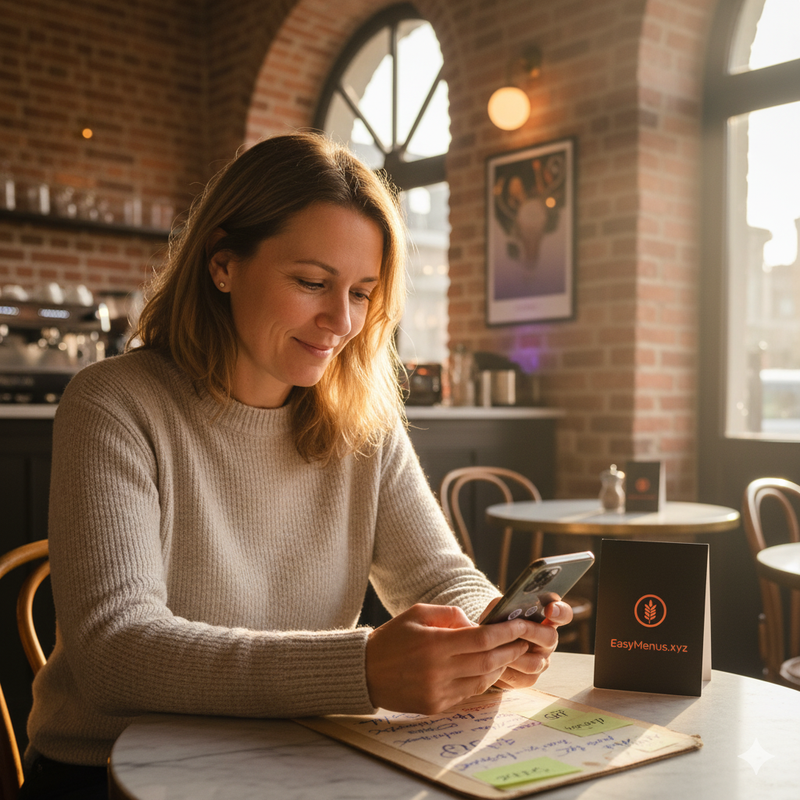
The Butter Crisis: How One Ingredient Change Nearly Cost a Brussels Café €87,500
Marie opened her café email at 6:47 AM on a Tuesday. The subject line read: "Important Product Update - Your Regular Butter." She was halfway through her first coffee when the words stopped making sense. Discontinued. Replacement product. Contains soy.
Soy. One of the fourteen allergens every EU restaurant must declare. And butter was in eighteen dishes on her menu.
Marie grabbed last month's printer invoice. One hundred twenty euros for three hundred menus. She'd just paid it two weeks ago. Now she'd need to reprint everything again. But that was just the beginning of what would become the worst fortnight of her restaurant career.
The first problem was simply finding every dish with butter in it. Marie spent Tuesday afternoon pulling recipe cards, checking prep sheets, questioning her chef about which sauces used clarified butter versus olive oil. Three hours later, she had her list. Eighteen dishes. From breakfast croissants to dinner fish preparations. All of them now contained a soy allergen that wasn't on the menu.
Her graphic designer could start work on Thursday. Earliest turnaround was Monday. The printer needed another week. Marie did the maths. Fourteen days minimum before corrected menus arrived. Fourteen days of her staff trying to remember which dishes now contained soy, trying to warn every customer who mentioned allergies, hoping nobody got it wrong.
On Wednesday morning, a regular customer ordered the herb-crusted salmon. Marie's newest server, three weeks on the job, assured her it was dairy-free. The server forgot about the butter-based herb crust. The customer's EpiPen was in her bag. The ambulance arrived in nine minutes. The customer recovered fully, thank God, but Marie's hands shook for two days afterwards.
The health authority inspector arrived the following Monday. The fine was eight thousand euros. The customer's solicitor mentioned seventy-five thousand in their initial letter. Marie's insurance broker rang to discuss "the incident" and "premium adjustments." Her TripAdvisor rating dropped from four and a half stars to three point two within a week.
What haunted Marie most was how preventable it all was. Not the supplier change - that was beyond her control. But the chaos that followed? That was entirely down to having information trapped in printed paper instead of somewhere she could update instantly.
Her friend Sophie ran a bistro in Amsterdam. When Marie told her the story over the phone, Sophie was quiet for a moment. Then she said: "I had the same thing happen last year. Took me thirty seconds to fix it."
Sophie explained she'd switched to digital menus the previous spring. When her supplier changed an ingredient, she logged into her dashboard, updated the butter listing to include soy, and hit publish. The system automatically flagged the soy allergen on every dish containing butter. Every customer's phone showed the updated information immediately. No printing. No two-week danger zone. No memorisation. Thirty seconds.
Marie visited Sophie's bistro the next weekend. She watched customers scan the QR code, open the menu on their phones, tap the allergen filter, and instantly see only the dishes safe for their dietary needs. No awkward conversations. No waiting for servers. No anxiety about whether the information was current. The menu answered their questions faster and more accurately than any human could.
What surprised Marie most was how simple the setup had been for Sophie. Fifteen minutes to input her dishes and tag ingredients with their allergens. The system included a pre-populated library of common ingredients already tagged - butter, flour, nuts, shellfish - so Sophie only needed to verify rather than research from scratch. After that initial setup, maintaining it took barely two minutes daily for specials and seasonal updates.
Sophie showed Marie something else that sold her completely: the audit trail. When the health inspector asked Sophie to demonstrate her allergen management system, she pulled up her dashboard and showed a complete change history. Every ingredient modification, dated and documented. Every allergen update tracked automatically. The inspector had actually complimented her systematic approach.
Marie signed up that evening. The onboarding took twelve minutes. She photographed her printed menu, reviewed the extracted dishes, tagged her ingredients with allergens, and published her digital menu. By midnight, every table in her café had a QR code. By Tuesday morning, customers were using it.
The first real test came three weeks later. Her chef wanted to add pine nuts to the pesto recipe. Six dishes used that pesto. With printed menus, this would have meant another hundred twenty euros and another two-week scramble. Instead, Marie added "tree nuts" to the pesto ingredient, clicked publish, and all six dishes updated automatically. Thirty seconds. Zero euros. Zero risk.
Her newest server, the one involved in the salmon incident, told Marie the digital menu had transformed her confidence. Before, allergen questions filled her with dread - so many dishes, so many ingredients, so much to remember. Now when customers asked about allergens, she simply said: "Everything's in the digital menu, and you can filter by your specific allergies to see safe options. But I can also check our system right now if you prefer." The customer usually chose to filter the menu themselves, which meant faster service and zero risk of human error.
Marie's insurance broker rang again six months later. Her premium was dropping. Documented allergen management system, audit trail, zero incidents since implementation. Risk reduced, premium reduced.
But what Marie valued most wasn't the money saved or the compliance confidence. It was sleeping through the night without wondering if tomorrow would bring another supplier change, another menu crisis, another customer in an ambulance. Digital menus hadn't just solved her allergen problem. They'd eliminated the recurring nightmare of printed menu roulette.
Three months after the butter crisis, Marie received an email from her original customer - the one with the salmon incident. She was coming back to the café. She'd seen Marie's digital menu online, noticed the allergen filtering feature, and wanted to give them another chance. She ordered the salmon again. This time, the menu clearly showed every allergen in the dish. No confusion. No risk. No ambulance.
Marie framed that email. Not because it was a happy ending, but because it reminded her that in the restaurant business, information isn't just data. It's trust. And trust can't live on paper that takes two weeks to update.
Related Compliance & Cost Stories:
- - The Tuesday Morning Email That Cost €4,000
- - The Health Inspector Who Smiled: Audit Trails That Actually Work
- - The Tourist Who Couldn't Read the Menu: €800 Translation Fix
Related Operational Flexibility:
- - The Seasonal Special That Broke the Bank: Why Printing Kills Flexibility
- - Howth Seafood Special: Managing Daily Catch Menus Without Reprinting
Related Market-Specific Insights:
- - The Galway Difference: How Student Areas Fill Empty Tables in Under an Hour
- - Killarney's Seasonal Challenge: €4,500 Menu Costs for Six-Month Operations
FREQUENTLY ASKED QUESTIONS
What are the fourteen allergens EU restaurants must track?
Every food establishment in EU member states must clearly communicate these allergens: cereals containing gluten, crustaceans, eggs, fish, peanuts, soybeans, milk, tree nuts, celery, mustard, sesame seeds, sulphur dioxide and sulphites, lupin, and molluscs. The information must be accurate, accessible before purchase, and updated immediately when recipes change.
Can restaurants actually face serious fines for allergen mistakes?
Penalties vary by country but range from two hundred euros to fifty thousand euros depending on severity. Beyond government fines, liability settlements from allergic reactions can reach six figures. The Amsterdam café in this story paid over eighty-seven thousand euros total when outdated printed menu information led to a customer's allergic reaction - including the health authority fine, liability settlement, and increased insurance premiums.
How long does manual allergen tracking actually take?
Initial setup typically requires fourteen hours researching ingredients and creating documentation. Each seasonal menu change costs another fifteen hours plus printing. Supplier ingredient changes require three to five hours tracking affected dishes, updating documentation, and reprinting menus. Most restaurants spend eighty to one hundred hours annually on allergen documentation, plus five hundred to eight hundred euros in printing costs, while still carrying significant compliance risk during transition periods.
What if my customers don't have smartphones?
Roughly two-thirds of European diners are comfortable with digital menus. For others, restaurant staff can access the allergen dashboard on a tablet or computer to answer questions with complete accuracy. Many restaurants keep two or three printed backup menus with basic allergen icons. The key advantage is that staff never need to memorise or guess allergen information - they can always verify instantly from the system.
How much time does digital allergen management actually require?
Initial setup takes ten to fifteen minutes uploading your menu and tagging ingredients. Most common ingredients come pre-tagged in the system library. Daily maintenance averages one to two minutes maximum for specials and updates. When ingredients change, updating the system takes thirty seconds and propagates automatically to all affected dishes. No printing costs. No transition period with incorrect information. No memorisation required.