
The €4,000 Problem: One Email That Changed Everything
Liam's beef supplier raised prices 14%. With 80 freshly printed menus, he faced the same calculation every Irish restaurant owner knows. Then he rang Sean.
The Tuesday Morning Email That Cost €4,000 (And Why Every Irish Restaurant Owner Knows This Story)
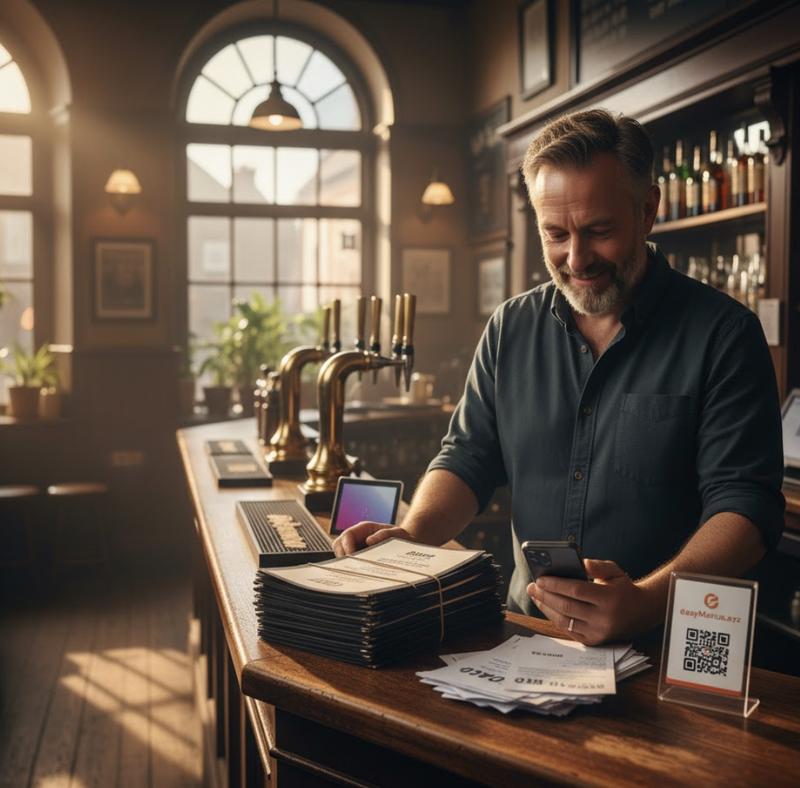
Liam opened his supplier email at quarter past nine on a Tuesday morning. Subject line: Price Adjustment Notification. The beef prices were up fourteen percent across the board. His hand moved instinctively to the stack of menus sitting behind the bar. Eighty menus. Printed three weeks ago. Two hundred forty euros to rush reprint them all.
He'd been running his Dublin restaurant for eleven years. This wasn't his first supplier price increase. It wouldn't be his last. But every single time, the calculation was the same. Absorb the loss for a week and watch your margins evaporate? Or spend another two hundred quid at the printer and watch your annual menu costs climb past four thousand euros?
Four thousand euros. Every year. Just to tell people what food was available.
Liam did what he always did. He rang his mate Sean who ran a place in Galway. Sean would understand. Sean always understood. They'd met years ago at an Irish Restaurant Association meeting and bonded over the shared absurdity of restaurant economics. High rents. Tight margins. Staff shortages. And menus that cost more to update than some dishes earned in profit.
But when Liam explained the beef price situation, Sean didn't commiserate. Instead, he laughed. Not unkindly. Just the laugh of someone who'd found a way out of a problem they'd both complained about for years.
"I haven't paid for menu printing in eight months," Sean said.
Liam assumed he'd heard wrong. Sean's place did seasonal menus. Farm to table. Local producers. The menu changed constantly. If anyone needed printing, it was Sean.
"Digital menus," Sean explained. "And before you start giving out about QR codes and tourists complaining, hear me out. I kept my printed menus. They're still on every table. Beautiful things. But when my supplier changes prices, or when I get wild garlic in spring, or when the fishmonger has something special? Thirty seconds to update the digital version. No printing. No waiting. No two hundred forty euro invoices."
Liam had tried QR-only menus during COVID. His customers hated them. Older tourists especially. The whole thing felt impersonal. Wrong. Not what Irish hospitality was supposed to be. He'd gone back to printed menus the moment restrictions lifted, and so had nearly everyone he knew.
But Sean wasn't talking about replacing printed menus. He was talking about having both. The beautiful printed menu for the experience. The digital backup for when prices changed or specials needed updating or international tourists needed translations.
"How much?" Liam asked, because this was the question that mattered.
"Twelve fifty a month. Hundred fifty a year. Unlimited updates."
Liam did the maths in his head. He'd spent thirty-eight hundred euros on menu printing last year. Professional design, quality paper, full-colour. He'd needed reprints when suppliers changed, when he adjusted pricing, when seasonal menus launched, when the printer made mistakes that needed correcting. Thirty-eight hundred euros to keep telling people what food he had.
Hundred fifty versus thirty-eight hundred. The maths wasn't even close.
The following Tuesday, Liam visited Sean's restaurant in Galway. He watched how it worked in practice. The printed menus were still beautiful. Still on every table. Still the first thing customers saw. But on each table, tucked discreetly beside the salt, was a small card with a QR code. Scanned it if you wanted allergen information. Scanned it if you needed the menu in German or French or Spanish. Scanned it if you wanted to see today's specials that hadn't made it onto the printed version.
Nobody was forcing anyone to use their phone. Nobody was making Irish hospitality feel impersonal or cold. The digital menu was just there, quiet and useful, for the moments when it solved a problem the printed menu couldn't.
What sold Liam completely was watching Sean update a price in real time. A supplier had texted about a fish delivery. Sean pulled out his phone, logged into his dashboard, adjusted the special's price, hit publish. Done. Twenty seconds. Every customer who scanned the QR code would see the updated price immediately.
No graphic designer coordination. No two-day turnaround. No print shop invoice. No week of serving food at the wrong margin because the menus hadn't arrived yet.
Liam signed up that evening. The setup process was simpler than he'd expected. He photographed his existing printed menu. The system extracted the dishes. He verified the prices and descriptions. Fifteen minutes. He printed new QR code cards for his tables. Another fifteen minutes. By closing time, his restaurant had both systems running simultaneously.
The first real test came three weeks later. His supplier raised lamb prices. In the old world, this would have meant a phone call to his designer, two days of back-and-forth on proofs, a week waiting for the printer, and two hundred euros leaving his account. Instead, he updated three prices on his phone while standing at the bar between lunch and dinner service. Thirty seconds. Zero euros.
But what surprised Liam most was what happened on a quiet Tuesday afternoon three months in.
Tuesday lunchtimes had been dead for years. The office workers came Friday nights. The tourists came weekends. But Tuesday? Empty tables. Staff standing around. Kitchen running at twenty percent. Losing money every Tuesday lunch service.
Sean had mentioned something about this. His Galway place had student customers - people who actually lived there, came back regularly, wanted to know about deals. So Sean would send them a text when he had empty tables: "Wednesday special - €15 steak and chips." Twenty tables filled in an hour. Students checked their phones, students showed up, students spent money.
Liam started asking at the till. Simple question. "Want to hear when we've got specials on? Pop your mobile number here." Within two months, he had four hundred numbers. Mostly regulars. Office workers. Local residents. People who actually came back.
First time he used it was a Tuesday morning. New lunch menu. €12 for two courses. Dead simple. He sent one message at eleven AM. Eight bookings came in before noon. Eight tables he would've had sitting empty. Tuesday lunch went from losing three hundred euros to breaking even.
He'd been spending four thousand euros a year telling people what food he had, instead of spending that money telling people to actually come in and buy it. For eleven years.
Six months after switching, Liam met Sean again at another industry event. They compared notes over pints. Liam had saved nearly two thousand euros in printing costs in half a year. His Tuesday lunchtimes were breaking even now instead of losing money. He'd filled over sixty tables on slow nights just by texting his regulars when he had space. Sixty tables that would've sat empty.
He'd updated his menu forty-three times without spending a cent on reprinting. Beef prices up. Lamb prices down. Seasonal specials. Daily catch changes. Forty-three times he would've either absorbed margin loss or paid the printer.
But the moment that had meant the most came from an unexpected place. An elderly German couple had come in for dinner. They'd been nervous about ordering, worried about language barriers and allergies. Liam's server showed them the QR code, demonstrated the German translation, showed them how to filter by allergens. The relief on their faces was immediate.
They left a five-star review mentioning specifically how welcome they'd felt. How easy the menu had been to navigate. How impressed they were that a traditional Irish restaurant had thought about international visitors without sacrificing its character.
Liam printed that review and put it behind the bar. Not because it was about technology. Because it was about hospitality. About serving people better. About keeping Irish restaurants competitive in a global tourism market without abandoning what made Irish hospitality special in the first place.
The printed menus were still there. Still beautiful. Still the first thing every customer saw. But now they were backed by something more flexible, more efficient, something that saved four thousand euros a year while making service better for both staff and customers.
Liam never got another Tuesday morning supplier email that ruined his day. Prices still went up. Suppliers still changed. Seasons still shifted. But now those changes took thirty seconds to manage instead of two weeks and two hundred euros.
The last time he spoke with Sean, they laughed about the old days. The panic when suppliers changed prices. The frustration of printing seasonal menus that went obsolete in weeks. The waste of it all.
"Best twelve fifty a month I've ever spent," Liam said.
Sean raised his pint. "To not being angry at the printer anymore."
They drank to that. Because in Ireland, where margins are tight and customers have high expectations and tradition matters enormously, any tool that saves four thousand euros while making service better isn't revolutionary technology. It's just common sense.
Related Compliance & Cost Stories:
- - The Butter Crisis: How One Change Nearly Cost €87,500
- - The Health Inspector Who Smiled: Audit Trails That Actually Work
- - The Tourist Who Couldn't Read the Menu: €800 Translation Fix
Related Operational Flexibility:
- - The Seasonal Special That Broke the Bank: Why Printing Kills Flexibility
- - Howth Seafood Special: Managing Daily Catch Menus Without Reprinting
Related Irish Market Insights:
- - The Galway Difference: How Student Areas Fill Empty Tables in Under an Hour
- - Killarney's Seasonal Challenge: €4,500 Menu Costs for Six-Month Operations
FREQUENTLY ASKED QUESTIONS
How much do Irish restaurants actually spend on menu printing annually?
Independent Irish restaurants typically spend between two thousand five hundred and five thousand five hundred euros annually on menu printing. Dublin city centre establishments average thirty-five hundred to fifty-five hundred euros. Galway restaurants near student areas spend twenty-eight hundred to forty-eight hundred euros. Seasonal operations in tourist areas like Killarney spend thirty-five hundred to forty-five hundred euros for just six or seven months of operation. These costs include initial printing, seasonal updates, supplier price changes, and correction reprints.
Don't Irish customers hate QR code menus?
Research shows Irish diners strongly prefer printed menus and largely abandoned QR-only systems after COVID restrictions lifted. However, hybrid approaches work exceptionally well. Restaurants that keep their printed menus on tables while offering QR codes as supplementary options see high customer satisfaction. The QR code provides allergen filtering, multilingual translations, daily specials, and current pricing without forcing anyone to use their phone. This respects Irish hospitality traditions while adding practical functionality.
How do digital menus help with international tourists?
Ireland welcomes nearly six million international visitors annually, with Dublin alone receiving over five point nine million overseas tourists. Digital menus can instantly display in over forty languages from a single QR code, eliminating the need for expensive printed translations. Printing four-language menus costs over eight hundred euros. Digital translation is included in standard pricing. Tourists can filter by allergens in their native language, creating safer and more welcoming dining experiences without requiring multilingual staff.
What makes Galway restaurants different for filling slow tables?
Galway has over forty thousand university students between University of Galway and ATU, creating a unique customer base. Students live locally year-round, check their phones constantly, and actively look for restaurant deals. When a Galway restaurant has empty tables on a Wednesday night, they can text their student customer list "Tonight only - €15 burger and pint" and fill twenty tables in under an hour. Students show up, students spend money, tables that would've sat empty are now generating revenue. This works in any area with repeat local customers - office districts, residential neighbourhoods, university towns - anywhere people actually come back instead of tourists who leave after one meal.
Can I keep my printed menus and still use digital?
Absolutely. The most successful Irish restaurants use hybrid approaches, keeping beautiful printed menus on tables while offering QR codes for supplementary information. Customers see printed menus first, maintaining traditional Irish hospitality. The digital version provides allergen details, daily specials, multilingual translations, and current pricing without requiring redesign and reprinting. This approach saves thousands in printing costs while respecting customer preferences and cultural expectations.