
The €180 Special: Why Wild Garlic Broke the Bank
Niamh's spring menu featured wild garlic for three weeks. Printing costs: €180. Profit from the specials: €85. Then her friend showed her the maths.
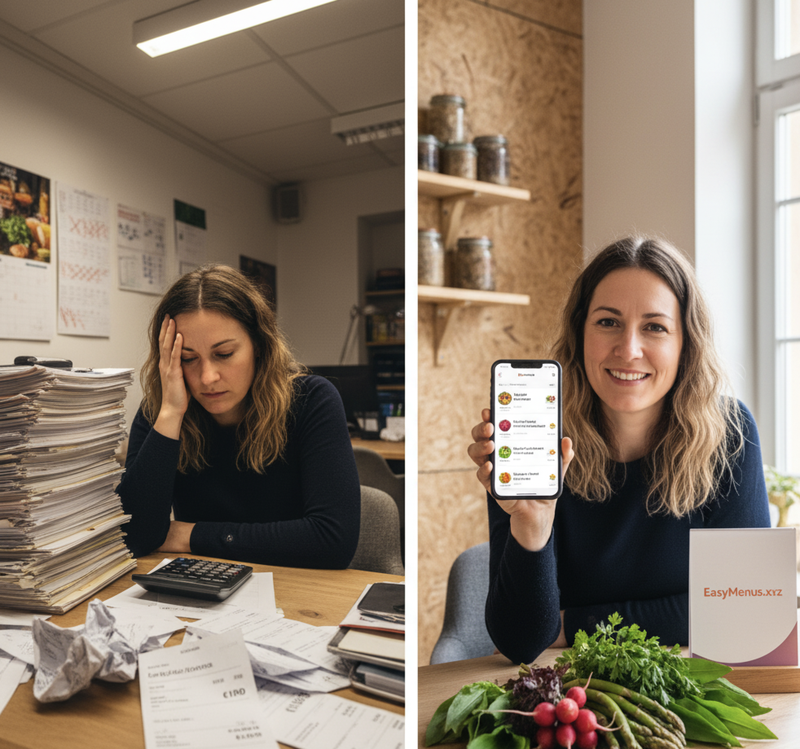
The Seasonal Special That Broke the Bank (And Why Wild Garlic Cost More Than It Earned)
Niamh's supplier texted her on a Thursday morning in April. Fresh wild garlic available. Limited quantity. Three weeks maximum before season ended. Perfect for spring specials.
Niamh ran a farm-to-table restaurant in County Clare. Seasonal ingredients were her brand. Local producers. Irish ingredients. Menus that changed with what was actually growing. Her customers expected it. Her reputation depended on it.
Wild garlic meant spring pasta. Risotto with wild garlic and local bacon. Pan-fried fish with wild garlic butter. Beautiful seasonal dishes that would last exactly three weeks before the wild garlic disappeared until next year.
She rang her printer. Three new specials. Add them to the existing menu. Standard turnaround.
The quote came back at one hundred eighty euros. Rush printing. Design update. Three hundred menus.
Niamh did the quick maths in her head. Wild garlic dishes would sell well. Premium pricing. Fifteen euros for the pasta, eighteen for the risotto, twenty-two for the fish. Three weeks. She'd sell maybe forty of each. Hundred twenty dishes total. Call it two thousand euros in revenue. Good margins on wild garlic. Roughly eight hundred euros profit.
One hundred eighty euros for printing seemed reasonable against eight hundred euros profit. She approved the quote.
The menus arrived the following Tuesday. Beautiful. Professional. The three wild garlic specials featured prominently. Customers ordered them immediately. The pasta was particularly popular. The risotto sold steadily. The fish was the premium option that moved slower but commanded good margins.
Three weeks later, the wild garlic season ended. Niamh pulled the numbers. She'd sold thirty-eight pasta dishes, twenty-six risottos, seventeen fish preparations. Eighty-one dishes total. Revenue was fourteen hundred euros. Cost of goods was about forty percent. Profit came to roughly eight hundred forty euros.
But she'd spent one hundred eighty euros on menu printing just for those three dishes. And now she needed to reprint again to remove them. Another one hundred eighty euros.
Three hundred sixty euros in printing costs for three weeks of seasonal specials. Against eight hundred forty euros profit. The printing ate forty-three percent of her profit margin.
The wild garlic specials had been successful. Customers loved them. The dishes were beautiful. The ingredients were local and seasonal. But the economics were brutal. Almost half the profit went to telling people the specials existed.
This was the calculation Niamh faced four times yearly. Spring wild garlic. Summer berries. Autumn game. Winter root vegetables. Every seasonal change meant new menu printing. Every three-week special meant two printing jobs - one to add it, one to remove it.
Her annual printing budget was forty-eight hundred euros. A significant chunk of that went to seasonal updates and temporary specials that lasted weeks or sometimes just days.
She mentioned this to her friend Claire at a food producers' meeting in Galway. Claire ran a restaurant near the university. She laughed. Not unkindly. Just the laugh of someone who'd found a way out of a problem they both shared.
"I haven't paid for seasonal printing in a year," Claire said.
Claire explained her system. Digital menu with printed backup. When seasonal ingredients arrived, she updated the digital version in thirty seconds. No printing. No cost. No delay. When the season ended, another thirty seconds to remove them. Free. Instant. Simple.
"But what about the customers?" Niamh asked. "Don't they want printed menus?"
"They've got printed menus," Claire said. "Beautiful ones. On every table. But the printed menu shows my core items. The digital version shows the specials. Daily catch. Seasonal additions. Limited-time items. Anything that changes frequently."
Niamh visited Claire's restaurant the following week. Watched how it worked. Each table had lovely printed menus showing the main dishes. Beside the menus was a small card: "Today's Specials" with a QR code. Customers could check the specials on their phones if they wanted. Most did. Some didn't. Staff could always tell them verbally. But the cost of updating the specials? Zero euros. The time to update them? Thirty seconds.
Claire showed Niamh something that sealed it completely. A spreadsheet tracking her seasonal update costs before and after switching systems.
Previous year: Eleven seasonal menu updates. Average cost one hundred sixty euros each. Total: seventeen hundred sixty euros in printing costs just for seasonal changes.
Current year: Eleven seasonal updates. Total cost: zero euros. Same frequency. Same quality. Same beautiful dishes. Zero printing cost.
"How much is the system?" Niamh asked.
"Twelve fifty a month. Hundred fifty a year. I saved seventeen hundred euros in seasonal printing alone. Paid for itself in two weeks."
Niamh signed up that evening. Setup took twelve minutes. She uploaded her core menu for printing. Set up her digital specials section. By Friday service, she had both systems running.
The real test came three weeks later. Local asparagus season started. Her supplier delivered the first bundles on a Monday morning. By Monday lunch service, Niamh had three asparagus specials on her digital menu. Grilled asparagus with hollandaise. Asparagus risotto. Pan-fried salmon with asparagus. No printing cost. No three-day turnaround. No one hundred eighty euro invoice.
She updated the description text on Tuesday morning when she realised she'd written "white asparagus" instead of "green asparagus." Thirty seconds. Fixed. If these had been printed menus, that error would've cost another one hundred eighty euros to correct.
The asparagus season lasted five weeks. Niamh sold ninety-four asparagus dishes. Profit was about eleven hundred euros. Printing cost for seasonal specials? Zero euros. For the first time in her restaurant career, the seasonal profit was actually the profit instead of being split with the print shop.
But what surprised Niamh most wasn't the cost savings. It was the creative freedom. Before, she'd hesitate to add specials unless they'd last at least two weeks. The printing cost needed to justify itself. Short-term items like a three-day mushroom availability or a weekend game special often didn't get added because the economics didn't work.
Now? Her supplier texted about fresh mackerel on a Tuesday. By Tuesday lunch, she had mackerel special on the menu. It sold out by Wednesday dinner. She removed it Wednesday night. Total cost: zero euros. Total time: sixty seconds.
Wild mushrooms available Friday and Saturday only? Added Friday morning. Removed Saturday night. Free. Instant. No printing economics to justify.
Her restaurant had become genuinely seasonal. Actually responsive to what was available daily. Not seasonal within the constraints of printing economics, but seasonal based on what was actually fresh and local.
Six months after switching, Niamh tracked her numbers properly. Previous year's seasonal printing costs: four thousand eight hundred euros total, with roughly eighteen hundred going purely to seasonal updates and limited-time specials.
Current year's seasonal printing costs: zero euros for updates. She still printed her core menus twice yearly for two hundred euros each. Four hundred euros total. Plus hundred fifty for the digital system. Five hundred fifty euros total.
Savings: forty-two hundred fifty euros annually. Most of that from eliminating seasonal update costs.
But the calculation that mattered most was the profit retention. Those wild garlic specials that earned eight hundred forty euros in profit? Previous year, she'd kept forty-eight percent after printing costs. Current year, she kept one hundred percent.
Across a full year of seasonal specials - spring wild garlic, summer berries, autumn game, winter roots, plus random short-term items like asparagus and mackerel and wild mushrooms - she estimated the printing costs had consumed roughly thirty-five hundred euros in what should have been pure profit.
That thirty-five hundred euros was now staying in her business. Equipment upgrades. Staff bonuses. Marketing. Actually growing the restaurant instead of feeding the print shop.
Niamh saw Claire again at the autumn producers' meeting. They compared notes. Claire's savings were similar. Both had eliminated thousands in seasonal printing costs. Both had become more genuinely seasonal because the economics finally worked.
But the moment that meant most to Niamh came during October game season. Her supplier had brought pheasant. Beautiful birds. But only four of them. Enough for maybe twelve dishes over two days.
Previous system? Niamh wouldn't have added it to the menu. Twelve dishes wasn't enough to justify printing costs. She'd have told the servers to mention it verbally. Some customers would order it. Most wouldn't hear about it. The pheasant would sell okay but not great.
Current system? She added it to the specials menu Thursday morning. Took a photo of the prepared dish. Uploaded it with description. By Thursday dinner, the pheasant was there on the digital specials. Clear. Professional. Available to every customer who checked.
All twelve portions sold by Friday lunch. She removed it from the menu Friday afternoon. Total cost: zero euros. Total time: ninety seconds. Total profit: fully retained instead of shared with the printer.
That was the freedom Niamh had wanted when she'd opened a farm-to-table restaurant. To actually follow the seasons. To respond to what was fresh. To feature what was local. Without the economics of printing deciding what made it onto the menu and what didn't.
The wild garlic would come back next April. She'd add it to the menu in thirty seconds. She'd keep one hundred percent of the profit. And when the three-week season ended, she'd remove it just as quickly.
Five hundred fifty euros annually instead of forty-eight hundred. The maths was obvious. But the real value wasn't the savings. It was getting to run the seasonal restaurant she'd always wanted to run, without the print shop taking a cut of every foraged ingredient and local harvest.
FREQUENTLY ASKED QUESTIONS
How much do seasonal menu updates actually cost restaurants?
Restaurants featuring seasonal ingredients typically update menus four to six times annually for major seasonal changes, plus additional updates for limited-time specials and short-term ingredient availability. Each printed menu update costs between one hundred twenty and two hundred euros depending on complexity and quantity. Farm-to-table restaurants and seafood establishments with frequent seasonal changes often spend between eighteen hundred and three thousand euros annually just on seasonal menu printing, separate from their core menu printing costs.
Why are short-term specials economically difficult with printed menus?
Short-term specials lasting less than two weeks require two separate printing costs - one to add the special and another to remove it when ingredients are no longer available. A three-week wild garlic special requiring menu addition and removal costs approximately three hundred sixty euros in printing. If the special generates under one thousand euros in profit, printing costs can consume thirty to fifty percent of profit margins. This makes many short-term seasonal ingredients economically unviable despite customer appeal.
How do digital menus handle daily specials and limited ingredients?
Digital menu systems allow restaurants to add daily specials in under one minute with zero cost. When ingredients are available, specials are added to the digital menu immediately. When ingredients sell out or are no longer fresh, specials are removed instantly. This enables genuinely responsive seasonal cooking where menu offerings match actual ingredient availability rather than printing economics. Restaurants can feature three-day mushroom availabilities or weekend-only game without printing cost considerations.
Can restaurants keep printed menus and still have digital seasonal updates?
Successful seasonal restaurants maintain printed menus showing their core year-round dishes while using digital menus for specials, seasonal items, and limited-time offerings. Printed menus remain on tables providing the traditional experience while QR codes offer supplementary seasonal information. This hybrid approach combines the permanence of printed menus with the flexibility needed for seasonal ingredients without requiring complete menu reprints for temporary items.
What about restaurants that change menus weekly or daily?
Restaurants with frequent menu changes find digital systems essential for economic viability. Weekly printed menu updates would cost approximately six thousand euros annually. Daily updates would exceed twenty-five thousand euros. Digital systems charge flat monthly rates regardless of update frequency, making daily menu modifications economically feasible. Farm-to-table restaurants, seafood establishments with daily catch variations, and venues featuring rotating local producers benefit significantly from unlimited update capability.
Related Cost & Operational Stories:
- - The Tuesday Morning Email That Cost €4,000
- - The Butter Crisis: How One Change Nearly Cost €87,500
- - Howth Seafood Special: Managing Daily Catch Menus Without Reprinting
Related Compliance & Documentation:
- - The Health Inspector Who Smiled: Audit Trails That Actually Work
- - The Tourist Who Couldn't Read the Menu: €800 Translation Fix