
The Yellowfin That Disappeared: Island Fresh Catch Chaos
Jean-Paul's Flic-en-Flac boats brought yellowfin Tuesday. His printed menu showed Monday's dorado. Tourists ordered unavailable fish for four days straight.
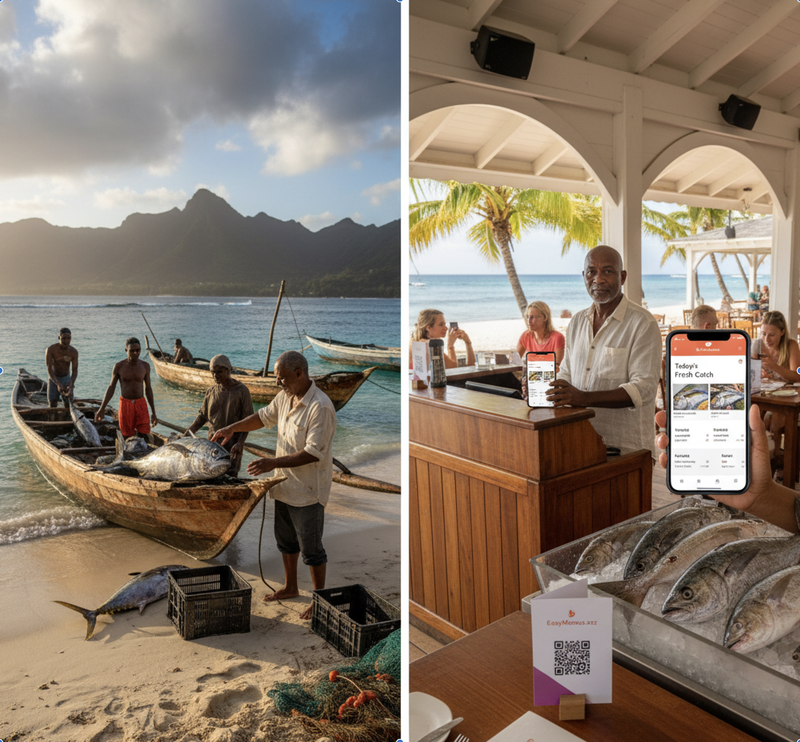
The Yellowfin That Disappeared Before Breakfast (And Why Island Fresh Catch is Different from Everything)
Jean-Paul ran a seafood restaurant in Flic-en-Flac, Mauritius. Thirty meters from the beach. The fishing boats came in every morning around six AM. Weather permitting. Which in the Indian Ocean meant: most days during calm season, fewer days during cyclone season, almost never during actual cyclones.
His restaurant was built on one promise: fresh catch daily. Whatever the boats brought, Jean-Paul cooked. Yellowfin tuna. Dorado. Wahoo. Marlin. Red snapper. Grouper. Barracuda. Octopus. The menu changed with the ocean. That was the whole point.
Except the menu didn't actually change with the ocean. The printed menu changed every two weeks when Jean-Paul could afford reprinting. The ocean changed every day. Sometimes every six hours.
Monday's boats brought dorado and red snapper. Beautiful specimens. Jean-Paul's printed menu from last week's reprint showed yellowfin tuna and wahoo. Because that's what boats brought last week. But this week the fish were different.
Monday lunch service started at noon. First table ordered the yellowfin tuna. Jean-Paul's server explained: "Sorry, no yellowfin today. We have beautiful fresh dorado and red snapper."
Second table ordered wahoo. Same explanation. Third table ordered yellowfin. Fourth table ordered wahoo. By two PM, Jean-Paul's servers had explained "today's catch is different" forty-seven times.
Some tourists understood. Island fishing was unpredictable. Weather dependent. They ordered the dorado. It was excellent. Others were annoyed. The menu advertised yellowfin. They wanted yellowfin. Why print a menu showing fish you don't have?
Tuesday morning, boats came in at six AM. Jean-Paul went to see the catch. Yellowfin. Finally. Beautiful forty-kilo specimens. Premium fish. His printed menu still showed dorado and snapper from Monday's verbal updates that hadn't made it to printing.
Wait. His printed menu showed yellowfin from two weeks ago. But he'd been verbally updating to dorado yesterday. Now he had yellowfin again. So the printed menu was accidentally correct today even though it was wrong yesterday.
This was the chaos of island fresh catch restaurants. The printed menu was random. Sometimes it matched what boats brought. Usually it didn't. Servers spent half their time explaining what was actually available instead of what the menu advertised.
Tuesday lunch, first table ordered yellowfin. "Yes, we have yellowfin today," the server said. Relief. The menu was correct. Second table ordered dorado. "Sorry, no dorado today. We have yellowfin, red snapper, and octopus."
The tourist looked at the menu. Confused. "But yesterday you said you had dorado."
"Yesterday we had dorado. Today we have yellowfin."
"So the menu is wrong?"
"The menu shows what we sometimes have. Today's catch is yellowfin."
The tourist ordered chicken. Safer. Predictable. Always available.
This happened forty times during Tuesday lunch service. Tourists ordering based on printed menus. Servers explaining actual availability. Some tourists switching orders. Some tourists leaving frustrated. Some tourists understanding island fishing reality but wishing the restaurant made it clearer.
Wednesday morning, weather turned rough. Small craft advisory. Boats didn't go out. No fresh catch. Jean-Paul had frozen yellowfin from Tuesday. His printed menu still showed yellowfin. Technically correct by accident. But it wasn't fresh. It was frozen yesterday's catch.
Wednesday lunch, tourists ordered yellowfin. Servers had to explain: "We have yellowfin, but it's from yesterday's catch, frozen. Weather prevented boats going out today. Still excellent quality, but not today's catch."
Half the tourists were fine with that. Half wanted genuinely today's catch and ordered something else. But the menu said "fresh catch daily." Which was true most days. But not today.
Thursday, weather was worse. Cyclone warning. Boats stayed in port. No catch. Jean-Paul served frozen fish from Tuesday. His menu still advertised fresh daily catch. Technically, he had fresh catch Tuesday. Today was Thursday. The menu was becoming fiction.
Friday, weather cleared. Boats went out. Brought wahoo and barracuda. Jean-Paul's printed menu showed yellowfin because that's what Tuesday's reprint reflected. Friday's actual catch was wahoo and barracuda. Back to explaining forty times per service.
This was year seventeen of the same pattern. Print menus showing last week's catch. Hope this week's catch matches. Usually it doesn't. Explain repeatedly. Frustrate tourists. Lose premium fish sales because menus advertise wrong species.
Jean-Paul knew restaurants in the Seychelles with identical problems. Mahé seafood restaurants served whatever boats brought from Seychelles Bank. Menus showed last week's species. Today's catch was different. Servers explained constantly. Réunion island restaurants faced same chaos. Zanzibar operations dealt with Pemba Channel fishing unpredictability.
Caribbean seafood restaurants knew this reality intimately. St. Lucia establishments serving Soufrière catch couldn't predict daily species availability. Barbados restaurants featuring flying fish faced seasonal availability changes weekly. Aruba and Bonaire restaurants serving Caribbean reef catch dealt with constant species variation. Turks & Caicos operations working with Caicos Bank fishing faced identical menu-versus-reality gaps.
Pacific island seafood restaurants operated in same chaos. Fiji restaurants serving South Pacific catch couldn't print menus matching daily availability. Cook Islands establishments working with Aitutaki lagoon fishing faced species variation. Rarotonga restaurants serving pelagic catch saw daily changes. French Polynesia operations in Bora Bora and Moorea dealt with similar unpredictability.
Mediterranean islands were slightly better but still challenged. Santorini restaurants serving Aegean catch faced seasonal fish variations. Malta establishments working with Mediterranean fishing dealt with species changes and EU quota restrictions. Cyprus restaurants featured daily Limassol harbor catch that varied constantly. Corsica operations serving French Mediterranean catch faced similar challenges.
Southeast Asian islands faced extreme fresh catch unpredictability. Phuket restaurants serving Andaman Sea catch dealt with monsoonal fishing patterns creating massive species variation. Bali operations working with Jimbaran Bay fishermen couldn't predict daily availability. Langkawi restaurants featuring Malaysian coastal catch faced seasonal variations. Boracay establishments serving Visayan Sea catch dealt with constant species changes and weather disruptions.
But across every island seafood market, the fundamental challenge was identical: fishing was unpredictable, weather was uncontrollable, species varied daily, and printed menus couldn't keep pace with ocean reality.
Jean-Paul was complaining about this to his fish supplier on Friday morning. The supplier laughed. Not unkindly. The laugh of someone who'd found a solution.
"Jean-Paul, you still printing menus?"
"What else would I do? I need menus."
"My brother in Papeete runs a seafood restaurant. Tahiti. Same problem you have. Boats bring different catch daily. He doesn't print the catch anymore. Prints his restaurant story, his preparation methods, his sides and starters. The fresh catch? Digital. Updates it every morning when boats come in. Takes two minutes."
Jean-Paul was skeptical. But the supplier showed him photos on his phone. The Papeete restaurant's printed menu was beautiful. Story about Tahitian fishing traditions. Photos of boats. Descriptions of preparation methods. Grilled. Steamed. Poisson cru style. Prices for different fish sizes. But no specific fish species listed.
The specific fish? On the digital menu accessible via QR code at tables. Today's catch: mahi-mahi, tuna, wahoo. Tomorrow's catch: whatever tomorrow's boats brought. Updated every morning in two minutes. Zero printing cost. Zero menu-versus-reality gap.
"How much does this cost?" Jean-Paul asked.
"Twelve fifty euros monthly. Your printing costs how much?"
Jean-Paul spent roughly forty-eight hundred euros annually on menu printing. Four reprints yearly at twelve hundred euros each. The reprints were expensive because island printing quality was poor, so he shipped jobs to Réunion or South Africa. Three-week turnarounds. High costs. And even with four reprints yearly, his printed menu matched reality maybe thirty percent of the time.
He signed up that afternoon. Setup took fifteen minutes. Created his printed core menu showing restaurant character, preparation styles, sides, and starters. Set up digital "Today's Fresh Catch" section showing species, sizes, and prices. By Saturday morning, he was ready.
Saturday at six AM, boats came in. Yellowfin, wahoo, and red snapper. Jean-Paul opened his phone. Updated the digital catch menu: "Today's Fresh Catch: Yellowfin Tuna (2-3kg) €42, Wahoo (3-4kg) €38, Red Snapper (1-2kg) €32." Added note: "Boats arrived 6 AM, grilled to order, served with coconut rice and vegetables." Published changes. Two minutes total.
Lunch service started at noon. Tourists scanned QR codes. Saw today's actual catch. Ordered yellowfin confidently. No confusion. No servers explaining menu-versus-reality gaps. No tourists ordering unavailable species.
First table ordered yellowfin. It was available. Server confirmed. Kitchen cooked. Tourists were delighted. "So fresh! Caught this morning!" they said. Which was actually true. Not printed-menu-fiction true. Actually true.
Second table scanned the menu. Noticed the update time: "Today's Catch - Updated 6:15 AM." They appreciated that. Showed the restaurant was genuinely fresh. Not "fresh" in the marketing sense. Fresh in the real sense.
But what surprised Jean-Paul most was Sunday. Weather turned rough again. Boats went out but returned with poor catch. Just octopus and small barracuda. Not premium fish. Jean-Paul updated the digital menu: "Weather-Limited Catch Today: Fresh Octopus and Barracuda. Check back Tuesday for premium yellowfin when seas calm. Today's octopus curry is exceptional."
He expected tourists to be disappointed. Instead, they appreciated the honesty. Several tables ordered the octopus curry specifically because the menu acknowledged weather reality. Tourists understood island fishing. They appreciated restaurants that were honest about it rather than pretending printed menus reflected reality.
Monday morning, weather was still rough. No boats went out. Jean-Paul updated the menu: "No fresh catch today due to weather. We're serving yesterday's frozen octopus and premium imported salmon. Fresh catch returns Tuesday when seas permit."
Lunch service was fine. Tourists knew exactly what they were getting. No confusion. No disappointment. The menu matched reality.
Tuesday, weather cleared. Boats brought huge catch. Yellowfin, dorado, wahoo, marlin, and barracuda. Jean-Paul updated the menu showing all five species with sizes and prices. Added note: "Exceptional catch after storm - five species available, all caught this morning."
Lunch service was the busiest Tuesday in months. Tourists saw the exceptional catch notice. Ordered premium fish. Average table spend was forty-eight euros instead of usual thirty-five. The enthusiasm was genuine. Real fresh catch after storm delay. The menu communicated that effectively.
Six months after implementing the system, Jean-Paul tracked his numbers. Fresh catch revenue: up thirty-two percent. Average table spend: up from thirty-three euros to forty-three euros. Customer complaints about menu-versus-reality gaps: eliminated entirely.
But the moment that meant most came during Cyclone Freddy in February. The storm disrupted fishing for eleven days. Jean-Paul updated his menu daily: "Day 3 of cyclone disruption - serving frozen catch from pre-storm inventory. Fresh catch returns when safe." Then: "Day 7 - still no boats, serving imported fish." Then: "Day 11 - boats returning tomorrow, first fresh catch expected afternoon."
Tourists appreciated the communication. Several tourists visiting Flic-en-Flac during the cyclone specifically chose Jean-Paul's restaurant because the menu honestly communicated storm-affected availability. Other restaurants pretended their printed menus were accurate. Jean-Paul told the truth.
When boats finally returned on day twelve, Jean-Paul updated within an hour: "FIRST FRESH CATCH POST-CYCLONE: Yellowfin, dorado, and wahoo, caught 10 AM today. Kitchen grilling now."
Every table that evening ordered fresh fish. Word spread through Flic-en-Flac hotels. "Jean-Paul has first fresh catch since cyclone." His restaurant was fully booked for three days.
Revenue from those three post-cyclone days: ninety-two hundred euros. Because the menu reflected reality minute-by-minute instead of week-by-week.
Jean-Paul never reprinted fresh catch species on menus again. His printed menu showed permanent elements: restaurant story, preparation methods, sides, wine list. The actual catch? Updated every morning based on what boats brought. Or updated to show "no boats today due to weather." Or updated to show "exceptional five-species catch."
Reality. Real-time. That was the promise Jean-Paul had wanted to offer for seventeen years but couldn't because printed menus updated too slowly.
Now his menus matched the ocean. And tourists who came to an island specifically for fresh seafood finally got menus that accurately reflected whether fresh seafood was actually available today.
Forty-eight hundred euros in annual printing costs became one hundred fifty euros in digital system costs. But more importantly, the constant servers-explaining-menu-versus-reality burden disappeared. And tourists got honest communication about what fishing boats actually brought versus what marketing fiction claimed they brought.
The yellowfin that disappeared before breakfast wasn't a problem anymore. Because when yellowfin disappeared, the menu updated in thirty seconds to show what actually arrived.
And when weather stopped all fishing, the menu honestly said so instead of lying with three-week-old printed species lists.
Island fresh catch restaurants operated in ocean reality. Their menus could finally reflect that reality instead of fighting it with expensive, obsolete, printed fiction.
FREQUENTLY ASKED QUESTIONS
Why is fresh catch so unpredictable on islands compared to mainland restaurants?
Island fishing depends on small-boat operations vulnerable to weather changes, not large commercial fishing infrastructure. Mauritius, Seychelles, Maldives, and Caribbean islands use traditional small boats launching daily weather permitting. Cyclone warnings, wind speeds above twenty knots, rough seas, or storm systems prevent boats from leaving. Mainland coastal restaurants often receive consistent supply from large commercial operations running diverse vessel types across wider geographic range. Islands face concentrated weather impacts - single storm system affects entire fishing area simultaneously. Species availability varies based on seasonal migrations, ocean temperatures, and breeding cycles. Yellowfin tuna may be abundant one week, absent the next. Mediterranean islands face EU fishing quotas creating species availability restrictions. Southeast Asian islands deal with monsoon season fishing limitations lasting months.
How do island restaurants traditionally handle daily catch variation?
Most island seafood restaurants use three approaches: verbal server communication (servers memorize daily catch and communicate to every table, creating service delays and inconsistent information), pictorial menu boards (chalkboards or whiteboards showing today's catch, but often not updated promptly or visible from all tables), or ignoring variation entirely (printing average species selection and substituting available fish when ordered items unavailable, creating customer disappointment). Premium restaurants employ dedicated staff members solely for explaining daily catch options. Budget restaurants over-rely frozen backup inventory. All approaches create service friction, reduce premium catch sales, and generate customer confusion about "fresh daily catch" promises versus actual availability.
What happens to premium catch when restaurants can't advertise it effectively?
Premium species like marlin, wahoo, and yellowfin tuna command fifty to eighty percent price premiums over standard catch. When restaurants cannot effectively communicate premium availability through printed menus, tourists often order standard items or familiar species. Premium catch gets sold at standard pricing to avoid waste, destroying profit margins. Alternatively, restaurants freeze premium catch for later use, eliminating "fresh today" positioning. Some restaurants don't order premium catch because inability to advertise effectively makes premium pricing unsustainable. Island fishermen respond by reducing premium species targeting, knowing restaurants cannot sell at appropriate prices. Digital daily catch menus increase premium species sales thirty to sixty percent by enabling premium pricing and clear availability communication.
How do cyclones and storms affect island seafood restaurant operations?
Tropical cyclone seasons create extended fishing disruptions. Indian Ocean cyclones (November-March) affect Mauritius, Réunion, Seychelles, Zanzibar with multi-week fishing halts. Pacific cyclones impact Fiji, Cook Islands, French Polynesia, Samoa. Caribbean hurricane season (June-November) disrupts fishing across entire region. Single cyclone creates five to fifteen day fishing shutdown. Restaurants with printed fresh catch menus continue advertising unavailable fish, requiring constant verbal corrections. Digital menus enable honest communication: "Day 4 of cyclone disruption - serving frozen pre-storm inventory" or "First fresh catch post-cyclone arriving today." Tourists appreciate transparency rather than printed menu fiction. Post-cyclone demand for genuine fresh catch creates revenue spike for restaurants communicating availability effectively.
Can island restaurants maintain fresh catch quality standards while using frozen backup?
Professional island seafood restaurants maintain blast-freezer inventory of premium species for weather disruption periods. Properly frozen fish (-60°C blast freeze within hours of catch) maintains near-fresh quality for months. The quality issue isn't frozen versus fresh - it's honest communication about what's being served. Tourists accept frozen fish during obvious storm periods. They don't accept restaurants claiming "fresh daily catch" while serving five-day-old frozen inventory without disclosure. Digital menus enable honest real-time communication: "Fresh yellowfin caught this morning" versus "Yesterday's frozen yellowfin - weather prevented today's boats." Transparency builds trust. Hidden substitution destroys reputation. Island restaurants maintaining quality frozen backup plus honest digital communication satisfy tourists better than fresh-only promises impossible to keep through weather variations.
Other Island Restaurant Operations:
- - The Three-Week Wait: Why Island Menus Cost 3x Mainland
- - The Cruise Ship Crisis: 2,000 Tourists, Zero Mandarin Menus
- - The Resort with Five Menus and Forty Languages
Related Fresh Catch & Daily Operations:
- - Howth Seafood Special: Managing Daily Catch Menus Without Reprinting
- - The Seasonal Special That Broke the Bank: Why Printing Kills Flexibility